Your Cart is Empty

Updated October 2026
Short answer: most people grind weed wrong by cramming the top chamber full and spinning the lid until there's no resistance, which turns flower into fast-burning dust. Instead, break buds into pea-sized pieces, pull the stems, load them loosely around the teeth (not dead center), give it a few short twists back and forth, then tap. Done in seconds.
...or maybe you didn't choose the right cannabis grinder to begin with.
One glance at the grinder shelf at your local head shop or smoke shop shows you a lineup of different shapes, sizes, colors, "composite materials" and supposed features. Let's sort that out first.
Right off the bat, if you're buying any of the following, you're f'n up, friend:
Person: "I got a new weed grinder made out of cake!"
Us: "Y tho?"
Now, assuming you didn't fall into the trap too many stores are setting, and you wound up with a reputable cannabis grinder, the rest is easy, right? Cram it full of flower, twist the lid until it spins smoothly, load it into your blunt wrap, papers, pipe, bong or bubbler, and hit it hard and hot... right?
Well, that's one way. It's definitely what we see at seshes and cannabis events across the country. It's not exactly "wrong," as our headline teases, but there's a better way to grind, and even a best way.
The number one mistake we see, with any brand of hand-turned grinder, is jamming way too much bud in the top chamber and then spinning, spinning, spinning, spinning the lid over and over, waiting for the resistance to disappear.
99 times out of 100, you just pulverized your pot. And that's not a good thing.
In your attempt to fit a square peg into a round hole, you bullied and beat your buds into a powdery, fast-burning filler instead of a pillowy, smooth-smoking flower. Overpacking also strains the teeth, grinds unevenly, clogs the screen and wears out the grinder itself.

Don't beat yourself up now, buddy. A lot of grinder misuse comes from poorly planned design "features" found in the vast majority of herb grinders on the market.
Two of the biggest culprits of overgrinding are dull or misshapen teeth and small, poorly placed drop-through holes. Add some bad ergonomics (looking at you, nearly every grinder brand) and you have a perfect storm for trichome and terpene annihilation. If you want the nerdy version of why cutting beats crushing, read the science of grind size.
Some grinders take a different route entirely. The Flower Mill, for example, swaps teeth for a grooved milling plate and lets you load buds with stems, leaving the stem chunks behind up top. Clever idea, and it has fans. But milling is still mashing, and we'd rather slice. Pull your stems by hand and let sharp teeth do the work.
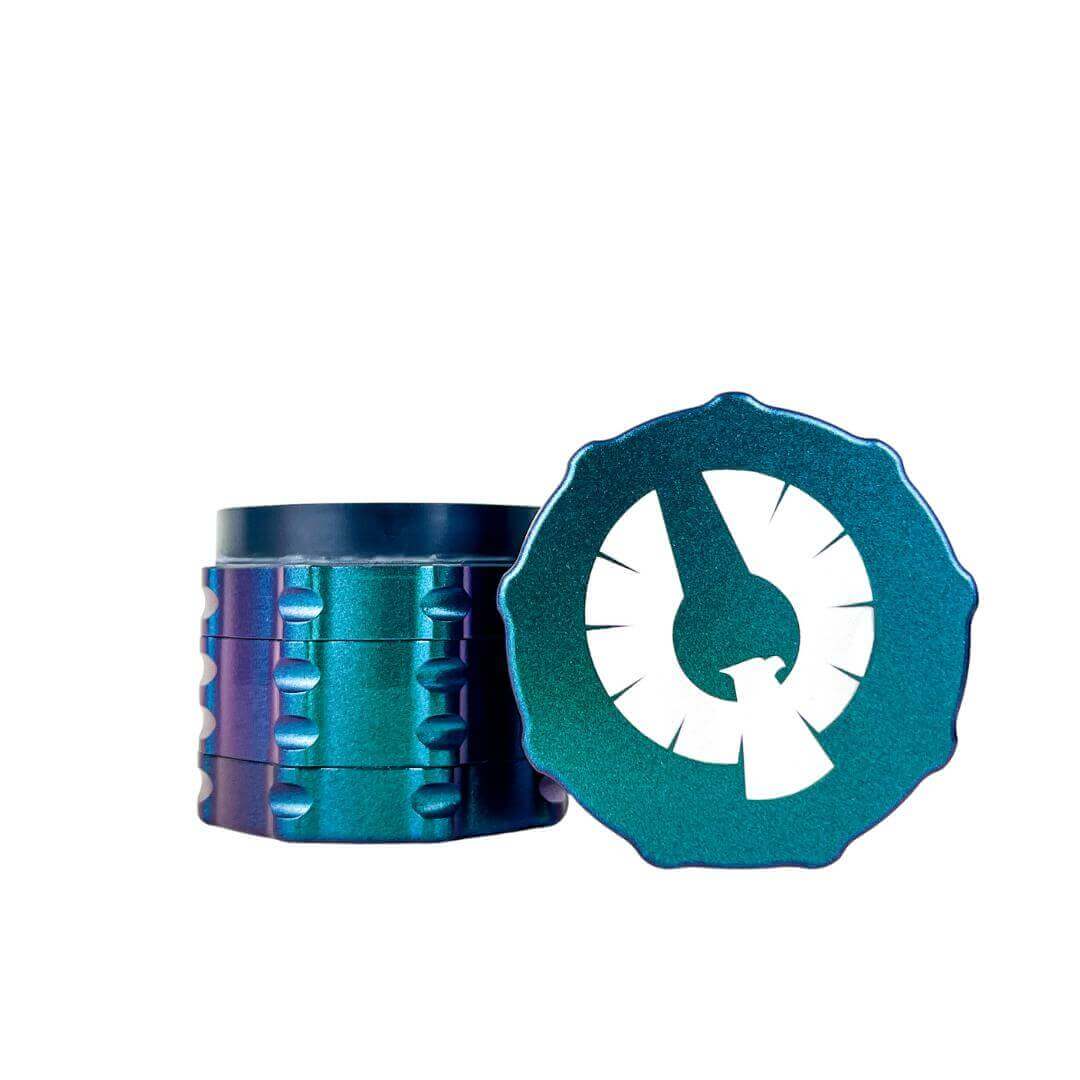
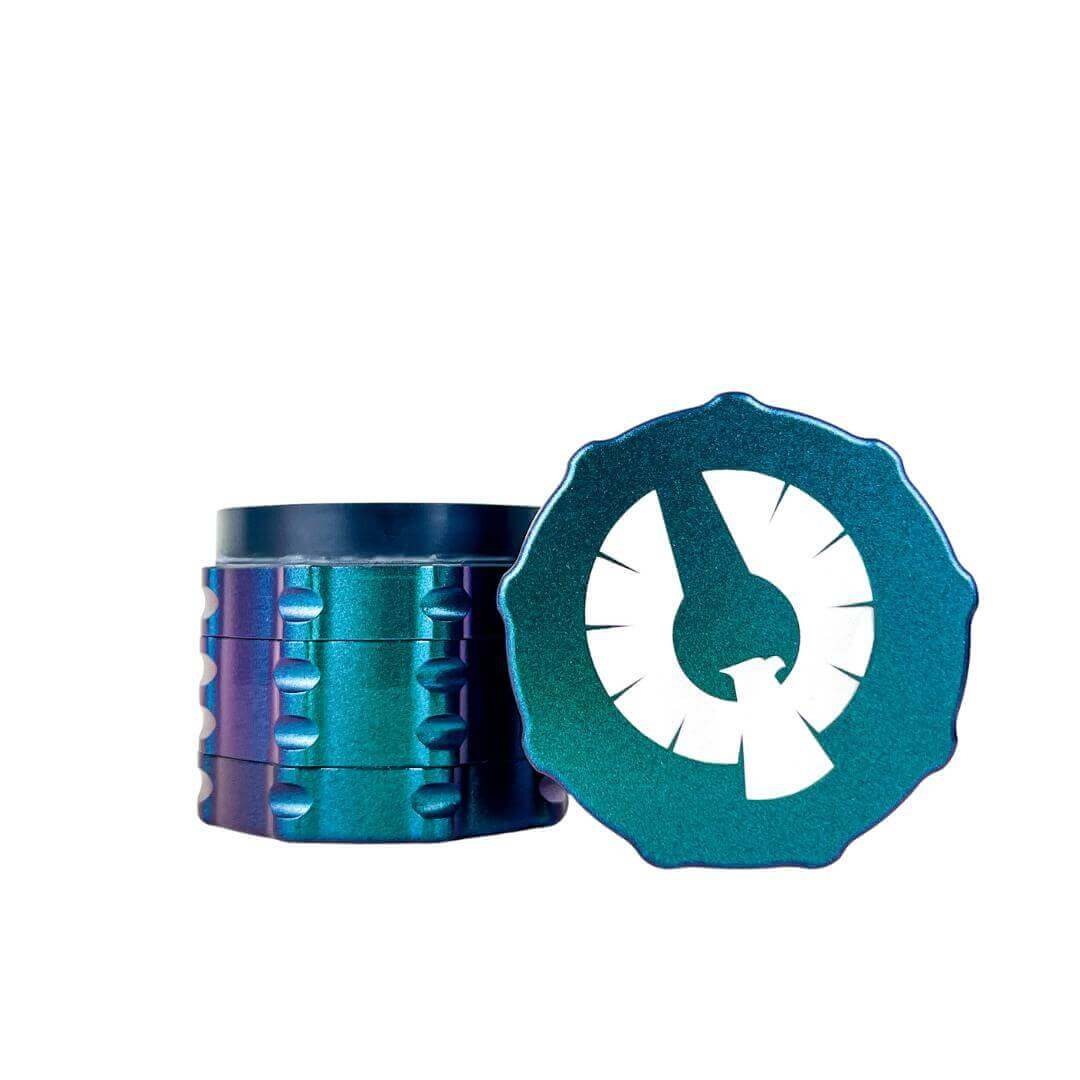
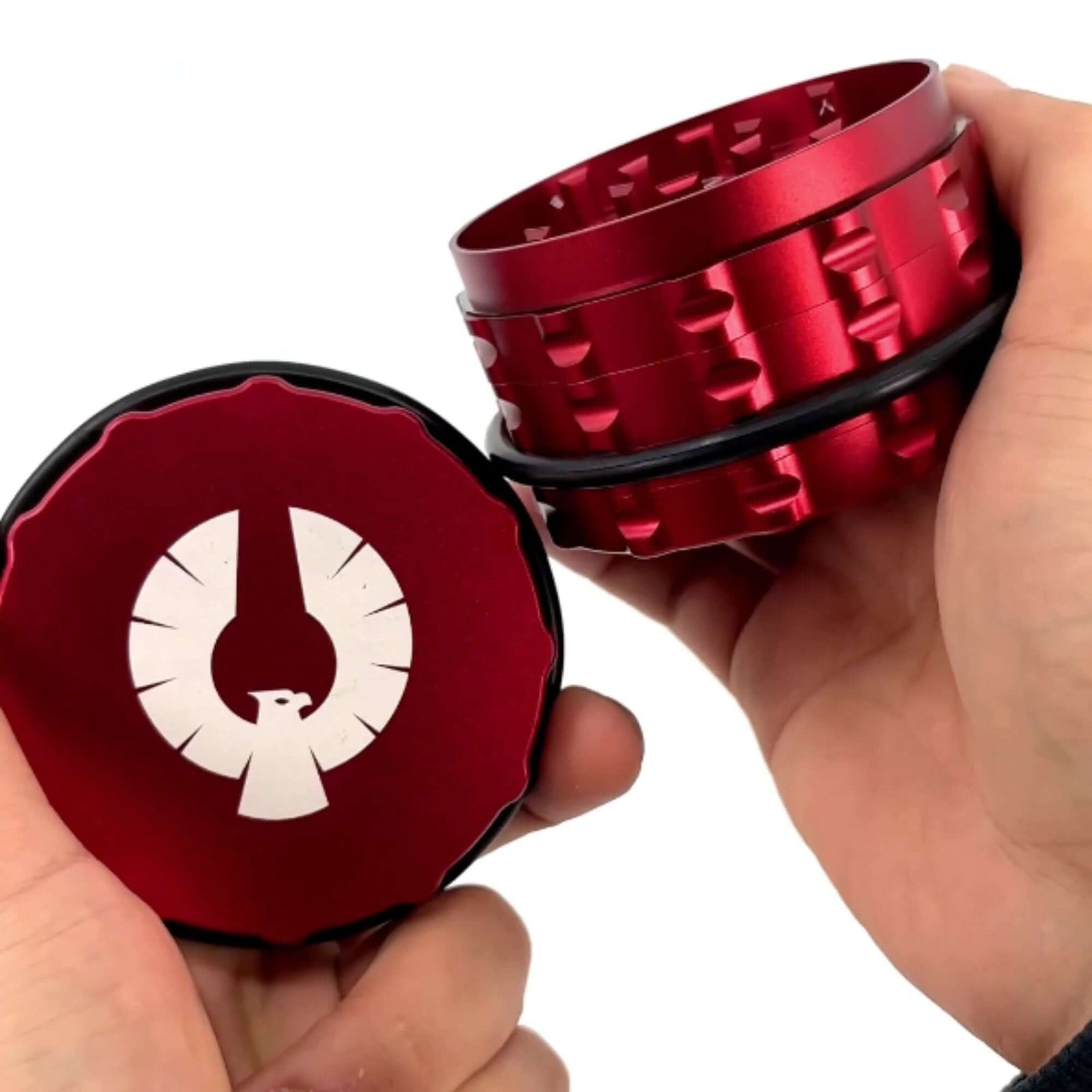
One of the first things people notice when they pick up a Phoenician is how solid it feels. The notched, grippy exterior was designed so folks with less grip strength can still slice through some sensi without a fight, and the threadless quick lock opens and closes with a short twist (about a third of a turn), no wrestling match required.
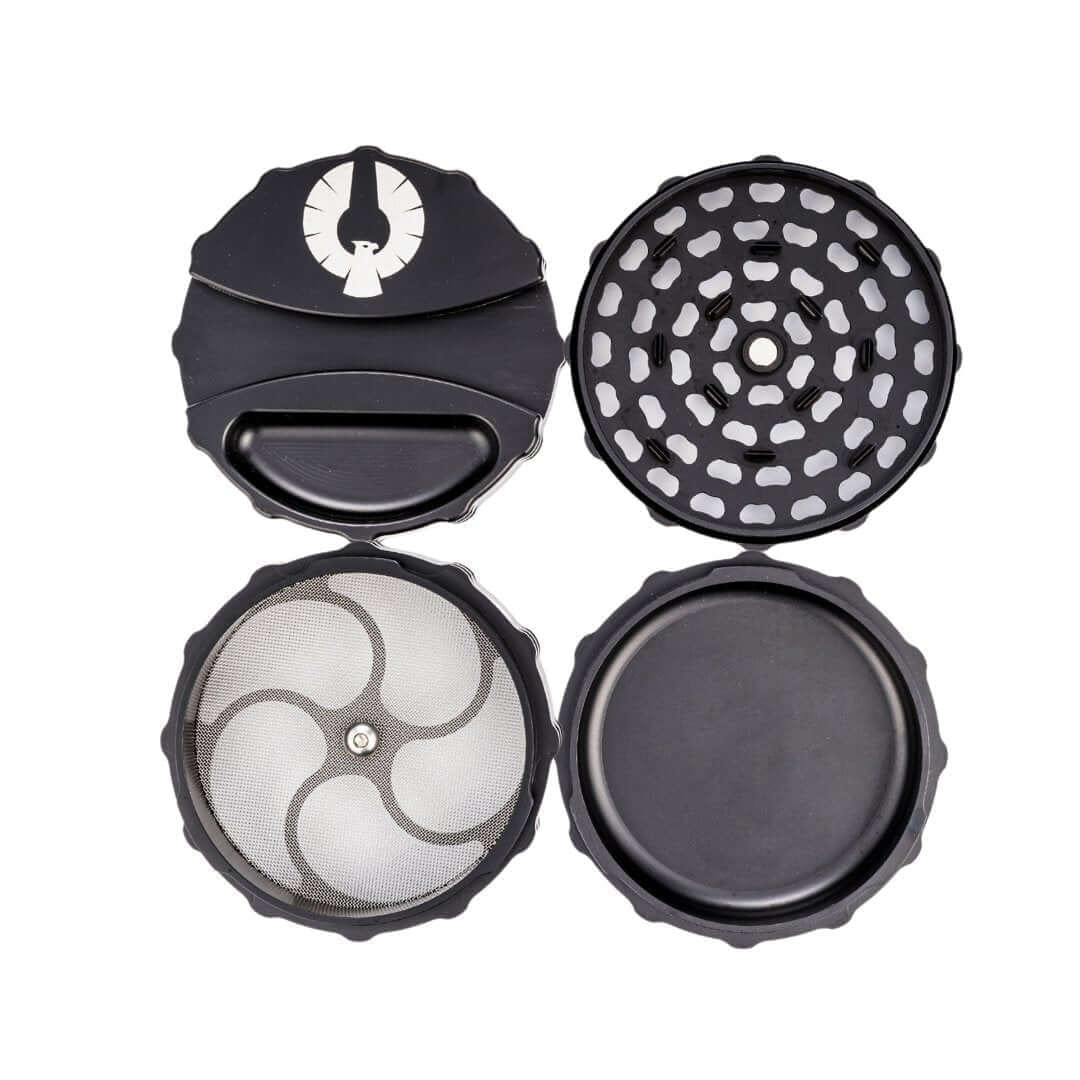
Pop the lid on a Phoenician 4 piece and you'll see precision-cut, diametrically arranged teeth surrounded by a minefield of oversized trapezoidal drop-through holes. A few short twists forward and back turns even the stickiest, stankiest buds into a pile of glistening ganja that looks like you spent ten minutes hand-cutting it with scissors.
That's the key. Anything more and you're needlessly abusing the plant and cutting into the quality of the experience to come.


Next time a buddy pulls out a grinder, or you find yourself in a head shop or smoke shop, open a few up. Look at the teeth, the holes, the threads, the screen. Decide for yourself whether each one is a feature or a failure.
Phoenicians feature a patented threadless quick lock and design details refined over more than a decade of in-house R&D, every one of them there to make the grind better. If you know, you know. Here's the full feature breakdown.
With sharp teeth, a handful of short twists back and forth is enough. If you're doing 20+ full spins, you're overgrinding or the teeth are dull.
No. A packed mound in the center just gets compressed. Spread pea-sized pieces around the teeth so they can actually cut.
Too much flower, too many turns, blunt teeth or tiny holes. Load less, twist less, and use a grinder with big drop-through holes.
Yes. Stems burn harsh, can poke holes in papers and strain the teeth. Pull them by hand before loading.
Grind smarter, not harder. Your flower (and your grinder) will thank you.

A fact-checked timeline of cannabis history, from ancient hemp and the first evidence of smoking to Reefer Madness, Schedule I, Prop 215 and 2026 rescheduling.

How to read a cannabis COA in two minutes: verify the lab, calculate total THC from THCA, read terpenes and safety panels, and spot inflated results.

All 50 states plus DC in one table: adult-use, medical and home grow status, plus federal Schedule III, the November 2026 ballot and what to watch in 2027.
A 2 piece weed grinder is a lid and a bowl, nothing else. No screen to clog, no chamber to empty, and a fluffier grind because the flower stays in the teeth instead of dropping through holes. Phoenician 2 piece grinders use the same arced cutter blades, threadless quick lock and aircraft grade aluminum as the PRO 4 piece, with a notched grip groove around the body, and they carry the same limited lifetime warranty.
People who roll or pack right away and do not want to collect kief, people who want the fastest clean possible, and anyone who prefers a lighter grinder. If you want to save trichomes, choose a 4 piece grinder with a kief catcher instead.
Medium: 2.47 inch diameter, 1.14 inch tall, 5 oz. The everyday size. $39.99.
Large: 3.225 inch diameter, 1.14 inch tall, 9 oz. For bigger batches and shared sessions. $49.99.
See all weed grinders or read the buyer's guide to compare 2 piece and 4 piece designs side by side.