Your Cart is Empty

Phoenician and Flower Mill solve the same problem with two very different pieces of engineering.
Phoenician is a cutting grinder: its sharp teeth slice through flower, and its oversized drop-through holes release the pieces once they are ready. Flower Mill skips conventional teeth and uses flutes to move and press flower through a milling plate. That difference is not trivia. It changes how much contact the flower has with the mechanism—and what happens to the fragile trichomes carrying much of its aroma and flavor.
So which one should you buy? If your priority is protecting top-shelf flower and producing a fluffy, even grind for a controlled burn, our pick is Phoenician. Its cut-and-release geometry is designed to avoid the smash-and-pulverize failure mode of blunt or overworked grinders. Flower Mill remains an interesting choice for someone who specifically wants a toothless mill and interchangeable plates.
Here is the useful version, with the engineering—and the flower—doing the talking.
| Feature | Phoenician | Flower Mill |
|---|---|---|
| Grinding mechanism | Cutter teeth with drop-through holes | Toothless milling plate and flutes |
| Flower handling | Slices, then releases flower through drop-through holes | Moves and presses flower through a milling plate |
| Trichome strategy | Reduces repeated contact; removable screen catches loose trichomes | Pollen-screen setup varies by model |
| Intended result | Fluffy, consistent pieces that support airflow and an even burn | Plate-selected texture on compatible Premium models |
| Closure | Threadless Quick Lock | Model-specific threaded construction |
| Core sizes | Small 1.855 in.; Medium 2.47 in.; Large 3.225 in. | 2.0 in. and 2.5 in. models |
| Chamber choices | 2-piece and 4-piece | Standard and Premium configurations vary by model |
| Screen approach | Removable screen in 4-piece models; 180, 300, and 400 micron options | Removable pollen screen on current Premium models |
| Grind adjustment | Choose cutter-based model and loading technique | Premium models support swappable milling plates |
| Current core price range* | $39.99–$99.99 | Current official listings vary by size, material, and edition |
| Standout utility | Large flagship adds a paper holder and lid tray | Premium plate options let owners change milling texture |
Prices and product details checked October 17, 2026.
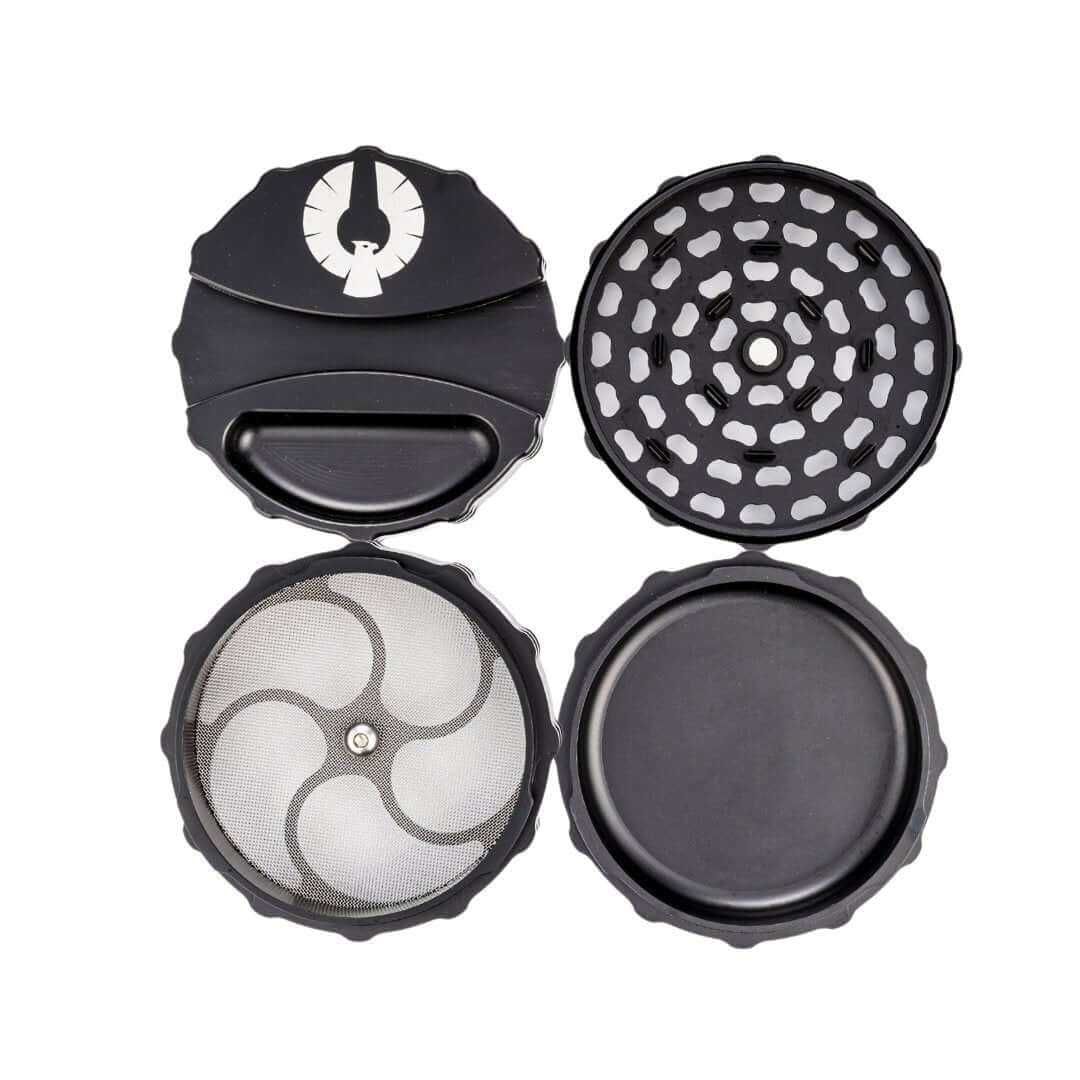
A Phoenician uses fewer, diametrically cut teeth and trapezoidal drop-through holes. Load flower between the teeth rather than directly over the center magnet, close the lid, and twist. The cutters slice the material, then let it fall into the chamber below instead of keeping it trapped in the cutting path.
Flower Mill takes a different route. Its flutes move and press flower across a milling plate, so the material passes through openings in the plate without conventional interlocking teeth. On current Premium models, owners can change plates to adjust the result.
Flower texture, moisture, load size, and technique still matter. But mechanically, Phoenician makes the stronger case for delicate handling: slice cleanly, release the flower promptly, and collect the trichomes that fall loose. Flower Mill owns the interchangeable-plate lane; Phoenician wins the cut-versus-mill argument for us.
Trichomes are the fragile resin glands that produce and store most of the flower’s cannabinoids and terpenes—the compounds behind its aroma and flavor. Mash those glands against metal and some of that sticky resin ends up smeared on the grinder. Cut the flower cleanly and more trichomes stay attached, while loose heads can fall through a 4-piece screen as kief.
That is the idea behind Phoenician’s fewer, razor-sharp teeth and oversized drop-through holes. The teeth act more like scissors than blunt pegs, and the flower exits the cutting area once it reaches size. Less repeated contact means less opportunity to smash resin into the chamber walls or pulverize an already-finished grind.
The payoff shows up in the session. Even, fluffy pieces leave more consistent air gaps and tend to burn more evenly. A mixed pile of chunks and powder creates hot spots, restricted airflow, and a faster, harsher burn that can cook volatile terpenes before you taste them. A grinder cannot add flavor that was not already in the flower; it can simply do a better—or worse—job of preserving and presenting it. Our science of grinding guide explains the particle-size and burn behavior in more detail.
Flower Mill’s toothless mechanism is clever, but it still depends on repeatedly moving and pressing flower against a plate. We do not see that extra surface contact as an advantage for fragile, resin-rich flower. For trichome preservation, fuller flavor, and a more controlled smoke, Phoenician’s cut-and-release approach is the more convincing design.
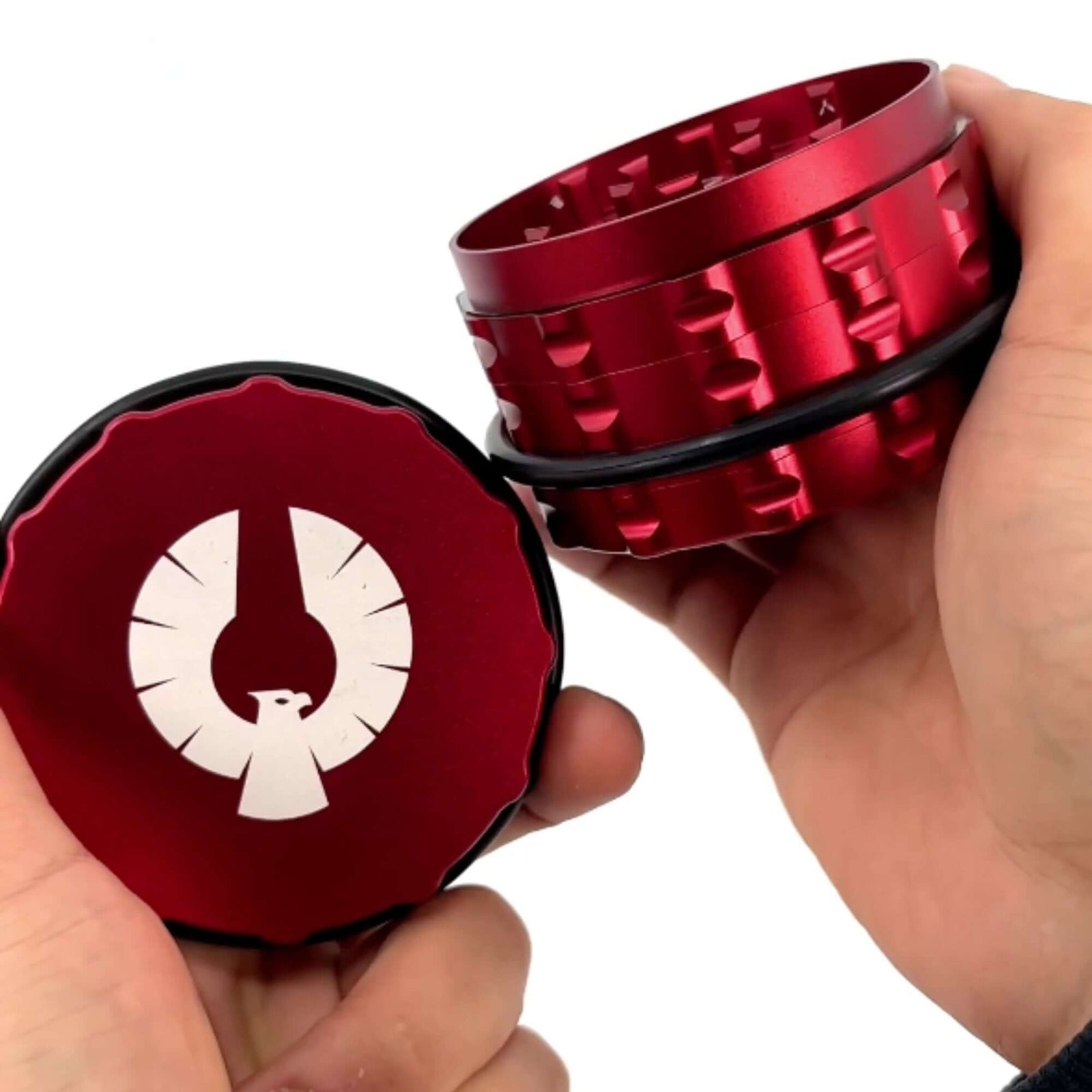
Phoenician’s patented Quick Lock is one of its clearest differences. The pieces engage with a short twist instead of several rotations of fine threads. That makes opening and closing fast, and there are no long threads to line up.
Flower Mill’s exact construction varies across its Standard and Premium families, so compare the current model page rather than assuming every version is identical. Its appeal is centered more on the milling chamber and plate system.
Grip is personal. Phoenician’s exterior contours give your fingers purchase, but the 3.225-inch Large can be a lot of grinder for smaller hands. The 2.47-inch Medium is the safer everyday Phoenician recommendation for most people. Flower Mill’s 2.0- and 2.5-inch formats may suit buyers who want a more compact diameter.
Phoenician offers three core diameters:
Flower Mill focuses on 2.0- and 2.5-inch formats. Official Premium product pages describe capacities up to roughly 2 grams for a 2.0-inch model and 3.5 grams for a 2.5-inch model, depending on the version. Treat those as model-specific figures, not a promise that every Flower Mill has the same capacity.
Choose based on the amount you actually grind—not the heroic amount you imagine grinding during an unusually ambitious Tuesday.
Phoenician’s 4-piece grinders include a removable screen above a lower collection chamber. The current screen system offers three mesh choices:
Because the screen is removable, you can clean or replace it without replacing the whole grinder. Phoenician also sells Screen Kits and Upgrade Kits for compatible sizes.
Current Flower Mill Premium models also list a removable pollen screen. The exact screen and chamber setup depends on the model, material, and generation, so confirm the official product page before buying.
If a serviceable screen with three clearly defined mesh choices is high on your list, Phoenician makes that decision straightforward. If interchangeable milling plates matter more, Flower Mill has the more distinctive adjustment system.
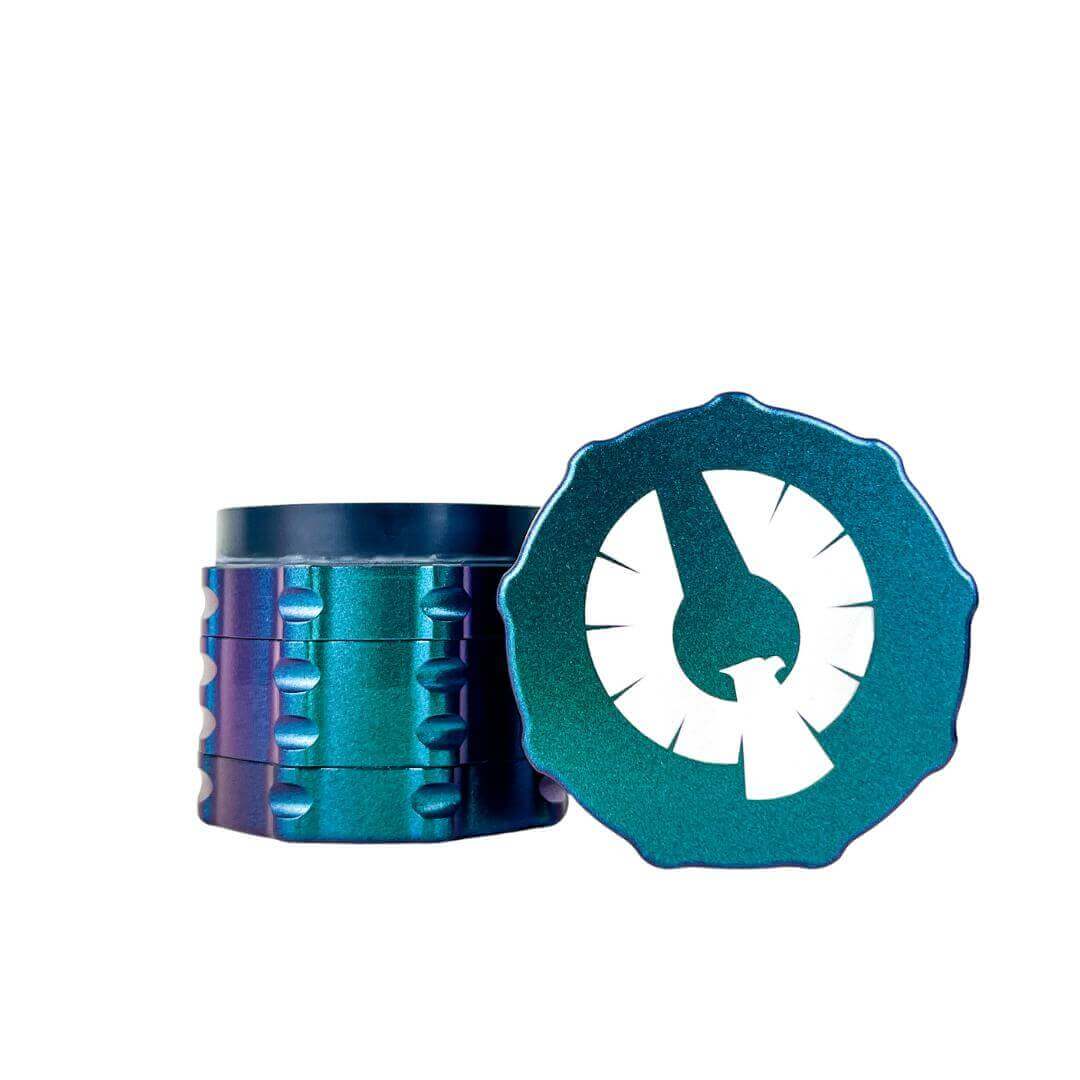
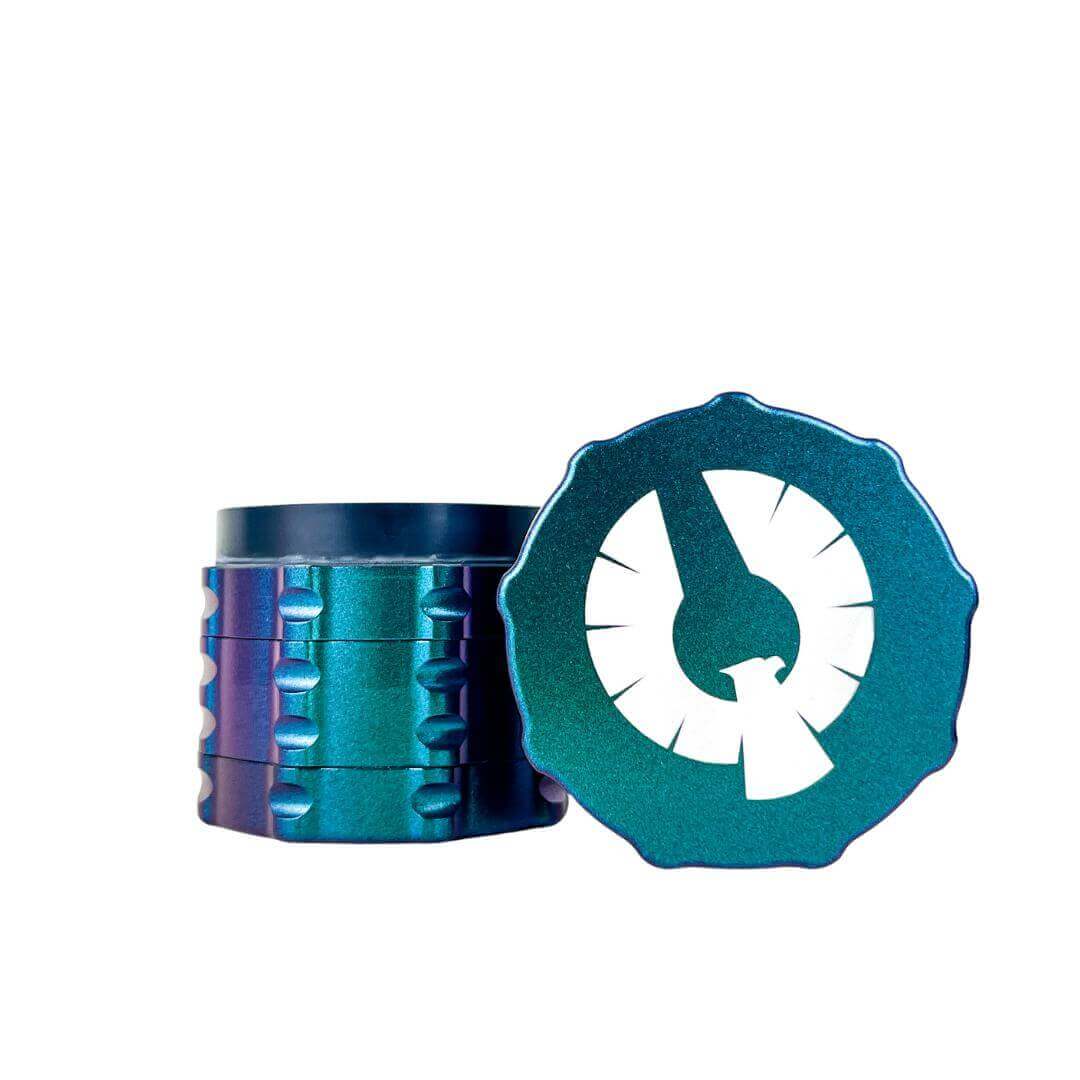
Phoenician’s core grinders are machined from 6061-T6 aluminum and use a Type II anodized finish. The range stays relatively simple: two or four pieces, three diameters, then color and lid variations.
Flower Mill’s current lineup includes aluminum models and versions that combine an aluminum exterior with food-grade stainless components. Materials vary by edition, so compare the exact listing rather than shopping by brand name alone.
That distinction matters for price and weight. Stainless components generally add heft. Some buyers enjoy that substantial feel; others would rather keep a daily carry light.
As of October 17, 2026, Phoenician’s core range runs from $39.99 for a 2-piece Medium to $99.99 for the flagship 4-piece Large with a paper holder and lid tray. The 4-piece Medium is $79.99 and is the easiest Phoenician starting point for most buyers.
Flower Mill’s official store shows different prices across Standard, Premium, aluminum, stainless, and size variants. Because the catalog changes, compare the exact material and generation you want instead of relying on an old review—or on this article six months from now.
Phoenician offers free U.S. shipping on orders of $99 or more. Its grinders carry a limited lifetime warranty, subject to the current terms and registration requirements. Check Flower Mill’s current shipping and warranty pages directly when comparing total cost.
Both designs need occasional care. Sticky residue eventually turns any clever mechanism into a small argument.
For a Phoenician, brush away loose material, remove the screen and non-metal rings before deeper cleaning, and follow the current care instructions for anodized aluminum. Do not attack the finish with mystery chemicals or metal tools.
Flower Mill publishes model-specific guidance, which matters because its material combinations and removable parts vary. Follow the instructions for the exact model you own.
The practical difference is what you disassemble: Phoenician owners maintain cutting chambers, Quick Lock contact areas, and a removable screen; Premium Flower Mill owners also manage the milling plate system.
Our pick is Phoenician—especially for top-shelf, resinous flower.
Flower Mill is the more natural fit only if toothless milling and swappable plates are your priorities. For the job that matters most—breaking flower down while keeping more of its trichomes, aroma, and texture where they belong—Phoenician’s sharp cutters and drop-through geometry make more sense to us. Add the threadless Quick Lock, three size tiers, and removable screen system, and Phoenician is the more complete everyday grinder.
If you are leaning Phoenician but still debating size, start with the Medium. It carries the core four-piece features without asking your hand to manage the Large’s full 3.225-inch diameter.
Prefer a classic cutting grinder with a threadless lock and removable screen? Compare Phoenician 4-piece sizes, or read the weed grinder size guide.
No. Flower Mill’s defining mechanism uses a milling plate and flutes rather than conventional grinder teeth.
The main chamber connections use Phoenician’s threadless Quick Lock, which engages with a short twist.
Phoenician’s core line has three diameters—1.855, 2.47, and 3.225 inches. Flower Mill’s current core formats are 2.0 and 2.5 inches, with variations by model.
Both brands offer compatible models with a lower collection chamber. Phoenician’s 4-piece system stands out for its removable 180-, 300-, and 400-micron screen choices. Results still depend on flower condition, screen selection, use, and maintenance.
Phoenician is our choice. Its sharp teeth slice, its oversized holes release the flower once it is cut, and its removable screen catches loose trichomes instead of leaving them smeared around the grinding chamber. That cleaner, more consistent grind also supports more even airflow and burn behavior.

What you actually get at each weed grinder price tier, from budget plastic and zinc to premium machined aluminum, and where Phoenician's $39.99 to $99.99 lineup fits.

A 2 piece weed grinder is a lid and a bowl, nothing else. No screen to clog, no chamber to empty, and a fluffier grind because the flower stays in the teeth instead of dropping through holes. Phoenician 2 piece grinders use the same arced cutter blades, threadless quick lock and aerospace-grade 6061-T6 aluminum as the PRO 4 piece, with a notched grip groove around the body, and they carry the same limited lifetime warranty.
People who roll or pack right away and do not want to collect kief, people who want the fastest clean possible, and anyone who prefers a lighter grinder. If you want to save trichomes, choose a 4 piece grinder with a kief catcher instead.
Medium: 2.47 inch diameter, 1.14 inch tall, 5 oz. The everyday size. $39.99.
Large: 3.225 inch diameter, 1.14 inch tall, 9 oz. For bigger batches and shared sessions. $49.99. See all large weed grinders.
See all weed grinders or read our best weed grinder buyer's guide to compare 2 piece and 4 piece designs side by side.