Your Cart is Empty

Updated October 2026
Short answer: trichomes are the tiny, sticky, crystal-looking glands that cover cannabis flowers. They produce and store most of the plant's cannabinoids (like THC and CBD) and terpenes, the compounds behind aroma and flavor. There are three main glandular types, and when they shake loose in a 4 piece grinder, they collect as kief.
Look at a good bud under a light and it sparkles like it rolled through a snow globe. That frost isn't decoration, buddy. It's basically the whole point of the plant. Every flavor note, every smell that fills the room when you crack the jar, and most of the cannabinoids live in those little glands. Which means how you handle, store and grind your flower decides how many of them make it to your session.
"Trichome" comes from the Greek word for hair, and plenty of plants have them. Tomato leaves, mint, nettles. On cannabis, the glandular ones are little resin factories: a stalk (or no stalk) topped with a head full of sticky oil.
The plant didn't grow them for us. Trichomes are defense. The sticky resin traps and deters insects, the strong smell discourages animals that might snack on the flowers, and the coating helps shield the plant from UV light and drying out. We just happen to like what's inside.
| Type | Rough size | Where you find them | What matters |
|---|---|---|---|
| Bulbous | About 10 to 15 microns | All over the plant surface | Smallest, invisible without magnification |
| Capitate sessile | About 20 to 30 microns | Leaves and flowers, sitting flush on the surface | Head with almost no stalk |
| Capitate-stalked | About 200 to 300 microns tall, stalk included | Concentrated on flowers and sugar leaves | The big ones you can see; the richest source of cannabinoids and terpenes |
Sizes via Technology Networks; sources vary a bit by cultivar and measuring method.
Those capitate-stalked trichomes are the stars. A 2020 study out of the University of British Columbia found that stalked trichomes have 12 to 16 secretory cells versus about 8 in sessile ones, produce more cannabinoids, and carry a strongly monoterpene-heavy terpene profile. The researchers also suggested sessile trichomes may be an earlier stage that grows into the stalked kind. So when your flower looks frosty, you're mostly looking at the good stuff.
There are also non-glandular trichomes, the little hairs that don't produce resin. They're why some leaves feel fuzzy. Nobody's collecting those.

Growers watch trichome heads under a loupe or pocket microscope to time harvest. The heads change color as the plant matures:
Growing your own where it's legal? Our home grow guide covers harvest, drying and curing, which is where a lot of trichomes get saved or wrecked. Home grow rules vary a lot by state, so check your current state and local law first.
Trichome heads are fragile little balloons on stems. Five things wreck them:
Storage that works: an airtight glass jar sized to your stash, somewhere cool and dark, with a humidity pack if you like (most people aim for roughly 58 to 62 percent). Don't stash flower in the freezer for daily use: cold makes trichome heads brittle, and they snap off the moment you handle the bud.
This is where we get opinionated, because it's literally our job. A grinder can either keep trichomes on your flower and catch the ones that fall, or it can smear them all over its own teeth.
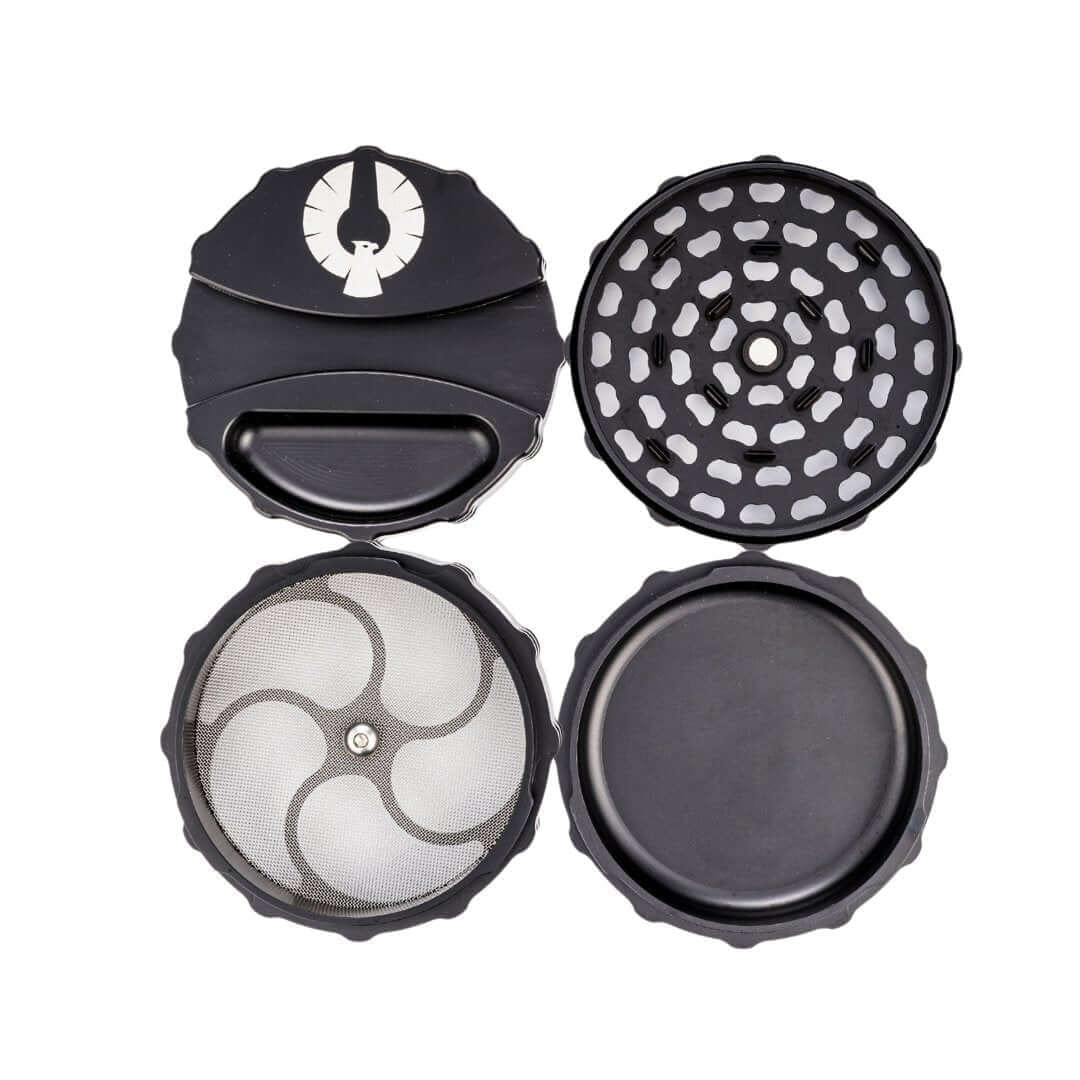
Here's the twist most kief guides miss: trichome heads are smaller than the holes in any normal grinder screen. Even a fine 180 micron screen passes them. So screen size doesn't decide whether trichomes get through. It decides how much plant matter sneaks along with them, and how fast sticky resin clogs the mesh.
| Screen | Kief you get | Best for |
|---|---|---|
| Fine 180 micron | Cleanest, most golden, slower | Dry flower, dry climates |
| Standard 300 micron (ships installed) | Balanced | Average flower and weather |
| Coarse 400 micron | Most kief, a little greener, fastest | Sticky flower, humid climates |
Phoenician screens are removable (one center screw), so you can swap sizes with the seasons. The Upgrade Kit includes all three, and the whole system is explained in our grinder screen micron guide.

Basically every concentrate is just a different way of separating trichomes from plant matter:
And when a dispensary label lists THC percentage and terpenes, that lab test is mostly measuring what the trichomes produced. Frost is a decent visual hint of quality, though not a guarantee.
Kief is trichomes that have fallen off the flower and been collected, usually in a grinder's bottom chamber or by dry sifting.
You can see the frosty coating, which is mostly capitate-stalked trichomes. To see individual heads and their color, use a jeweler's loupe or a pocket microscope.
Blunt grinders smear some onto their teeth. Sharp cutting teeth keep most on the flower, and a 4 piece screen collects the loose ones as kief instead of losing them.
All standard grinder screens let trichome heads through. Pick fine (180) for purity, standard (300) for balance, coarse (400) for sticky flower or the most kief.
Your flower spent months building those trichomes. Spend thirty seconds making sure your grinder doesn't waste them.

A fact-checked timeline of cannabis history, from ancient hemp and the first evidence of smoking to Reefer Madness, Schedule I, Prop 215 and 2026 rescheduling.

How to read a cannabis COA in two minutes: verify the lab, calculate total THC from THCA, read terpenes and safety panels, and spot inflated results.

All 50 states plus DC in one table: adult-use, medical and home grow status, plus federal Schedule III, the November 2026 ballot and what to watch in 2027.
A 2 piece weed grinder is a lid and a bowl, nothing else. No screen to clog, no chamber to empty, and a fluffier grind because the flower stays in the teeth instead of dropping through holes. Phoenician 2 piece grinders use the same arced cutter blades, threadless quick lock and aircraft grade aluminum as the PRO 4 piece, with a notched grip groove around the body, and they carry the same limited lifetime warranty.
People who roll or pack right away and do not want to collect kief, people who want the fastest clean possible, and anyone who prefers a lighter grinder. If you want to save trichomes, choose a 4 piece grinder with a kief catcher instead.
Medium: 2.47 inch diameter, 1.14 inch tall, 5 oz. The everyday size. $39.99.
Large: 3.225 inch diameter, 1.14 inch tall, 9 oz. For bigger batches and shared sessions. $49.99.
See all weed grinders or read the buyer's guide to compare 2 piece and 4 piece designs side by side.