Your Cart is Empty

Updated October 2026
Short answer: the earliest patent most grinder histories point to is U.S. Patent 795,746, filed April 19, 1905 and granted July 25, 1905 to William Henry Wingfield and John Balding. It described a two-part case with interlocking sharp pins for shredding pipe tobacco. Kief screens, 4 piece designs and threadless locks came much later.
Every time you twist your grinder, you're using a tool with more than a century of history behind it. Not bad for something that spends most of its life in a junk drawer next to dead lighters. So grind one up, buddy, and let's take a trip through the surprisingly weird history of the thing on your coffee table.
People have been breaking down dried herbs for about as long as there have been people. Mortar and pestle, knives, a flat rock and a round rock. For smokers specifically, the go-to tool for most of history was a blade. Pipe smokers sliced plug tobacco with a pocketknife, then rubbed the shreds between their palms to loosen them up.
It worked. It was also slow, sticky and left your favorite knife smelling like a pipe. Somebody was bound to get annoyed enough to invent something better.
In April 1905, William Henry Wingfield and John Balding filed a U.S. patent titled "Case and device for holding and disintegrating tobacco or other substances". It was granted that July as patent number 795,746. Note the "or other substances." Visionaries.
Here's what their design actually did, straight from the patent:
Read that list again and tell us it isn't a grinder. Two halves, interlocking teeth, a twisting motion, a little stash spot. The basic idea hasn't changed in more than 120 years. What changed is everything around it.
The 1905 design didn't turn into a household item, at least not that the historical record shows. Plenty of pipe tobacco was already sold pre-cut, and a knife was free. The grinder was a solution waiting for the right problem.
That problem showed up as cannabis. In the U.S., the Marihuana Tax Act of 1937 effectively pushed cannabis underground for most of the 20th century (the scare film Reefer Madness had already set the tone a year earlier). For decades, "prep gear" meant fingers, a record sleeve or a shoebox lid for picking out seeds and stems. Nobody was shopping for precision hardware for a plant that could get them arrested.
The counterculture of the 1960s and '70s brought rolling papers and pipes into the open, and head shops started stocking the gear. High Times magazine launched in 1974 and gave the scene a mainstream-ish voice. Grinders began showing up on head shop counters, but most were simple: wood, acrylic or cheap cast metal, two pieces, blunt pegs, threaded lids.
They did the job the same way the 1905 patent did, by tearing flower apart between pins. It just took more twisting, and the threads gummed up with resin. Everybody accepted that as the price of admission.
Somewhere in the head shop era, grinders grew more chambers. Nobody has a clean, verifiable "inventor of the 4 piece grinder" on record, so we're not going to make one up. What we can tell you is how the anatomy evolved:
| Design | What it added | Why it mattered |
|---|---|---|
| 2 piece | Teeth only, flower stays in the top | Simple, fast, the direct descendant of 1905 |
| 3 piece | A collection chamber below the teeth | No more picking flower out from between pegs |
| 4 piece | A mesh screen above a bottom chamber | Loose trichomes sift through and collect as kief |
| Removable screen | Screen held by a screw instead of glued in | Clean it, replace it, or swap the mesh size |
| Threadless lock | Locking wedges instead of screw threads | Nothing for resin to seize, no cross-threading |
Want to know why trichomes ended up driving grinder design? Our guide to trichomes explains what you're actually collecting down there.
California's Proposition 215 legalized cannabis for patients in 1996. In 2012, Colorado and Washington voted to legalize adult-use cannabis, and the market for legal accessories opened up fast. Suddenly people were paying real money for really good flower, and nobody wanted to shred it in a ten-dollar plastic grinder that left half of it on the pegs.
Brands answered with better materials. Anodized aluminum replaced pot metal. Santa Cruz Shredder became a respected name with its multi-catch thread design, and plenty of other brands chased sharper teeth and bigger kief chambers. Grinders went from novelty to gear.
But a lot of designs still kept the same two holdovers from the head shop era: blunt peg teeth that crush instead of cut, and threads that clog with resin. That's the bit we couldn't let go.

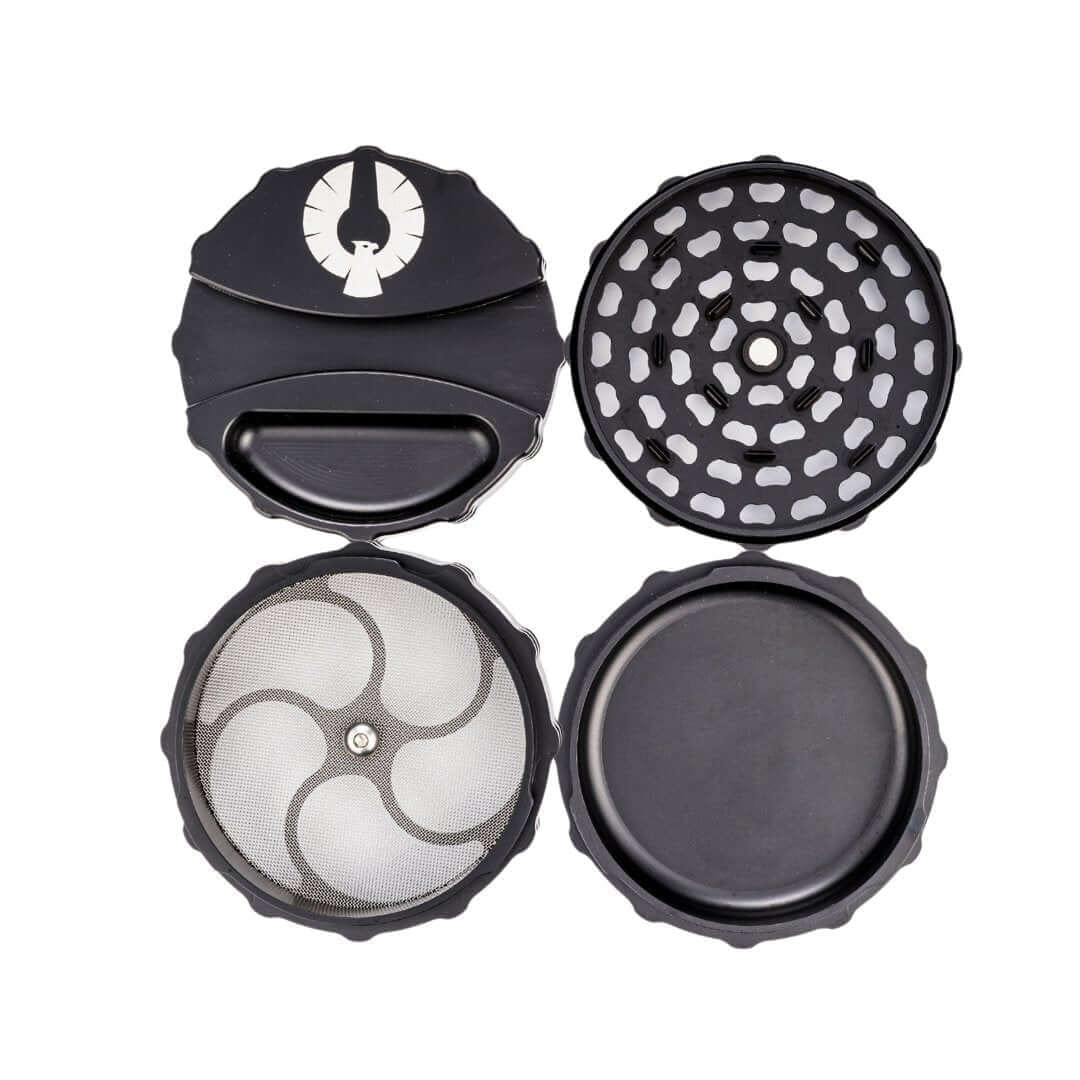
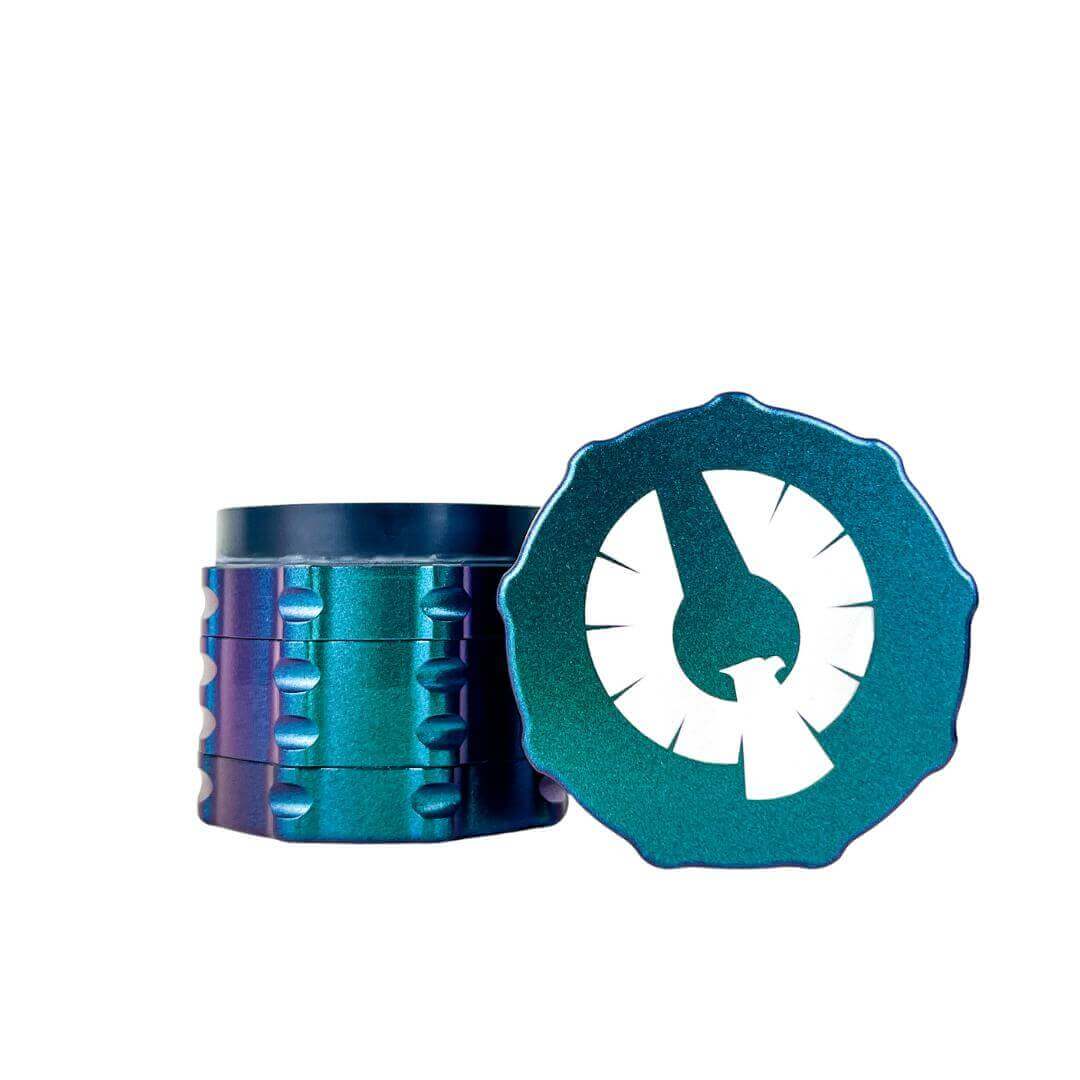
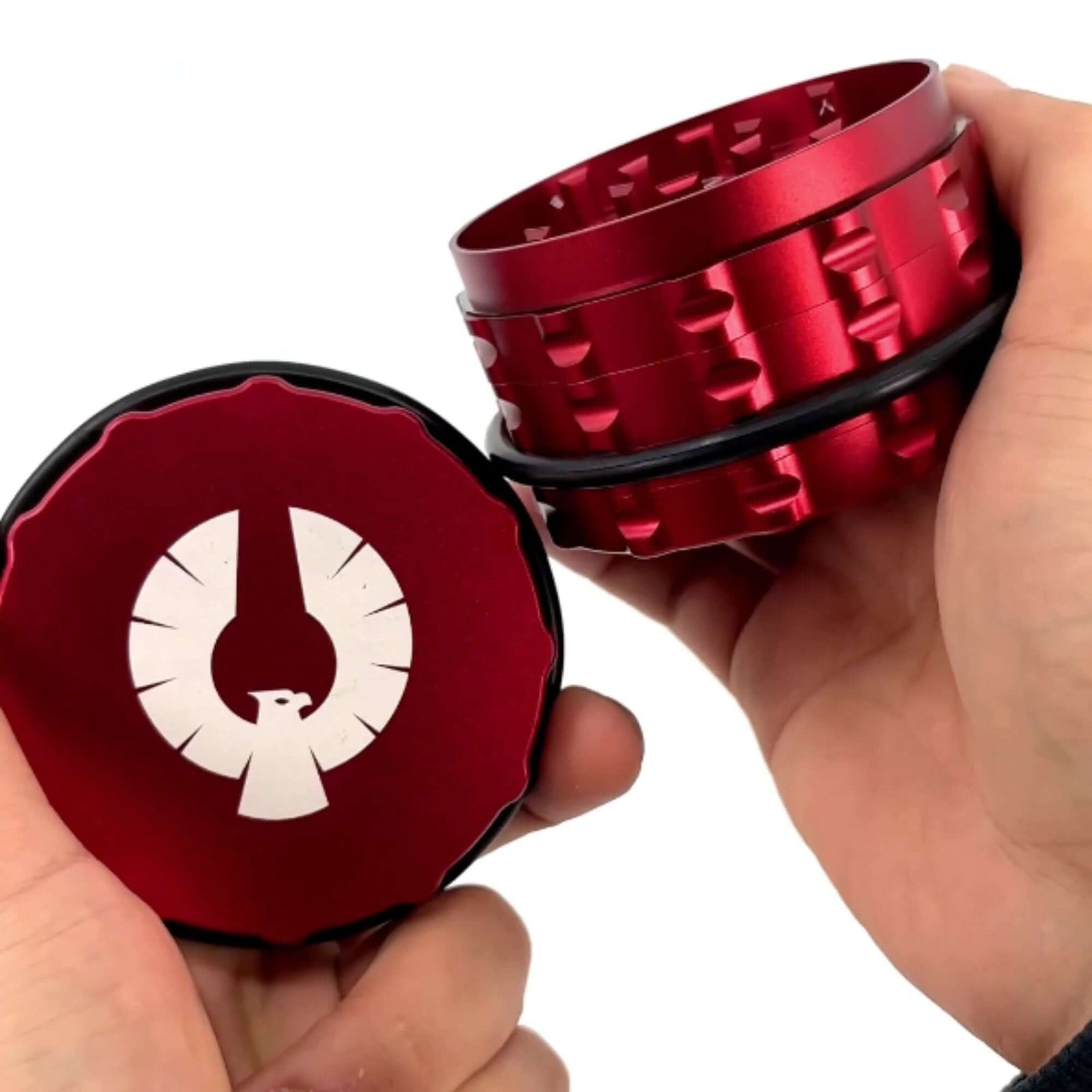
Phoenician has been building grinders since 2014, and we started by asking what would happen if you redesigned the whole thing instead of slapping a new logo on the same old part. Here's what came out of that:

Electric grinders exist now and they're fun for big batches, though they trade control for convenience. Pre-rolls are everywhere. And yet the hand grinder keeps winning for one simple reason: it's the best way to prep fresh flower right before you smoke it, exactly how you like it. Wingfield and Balding would probably be thrilled. Confused by the lid magnets, but thrilled.
If you're picking your own spot in grinder history, the grinder buying guide walks you through sizes and piece counts.
Nobody invented a grinder specifically for cannabis that we can verify. The earliest patent most histories point to, with a recognizably modern design, is U.S. Patent 795,746 from 1905, issued to William Henry Wingfield and John Balding for shredding tobacco "or other substances."
There's no reliable record of a single inventor or date. Multi-chamber grinders with kief screens became common in head shops in the late 20th century and went mainstream with legalization.
Knives, scissors, fingers, and for cannabis, a lot of hand-breaking on rolling trays and record sleeves.
Materials, teeth and mechanisms. Modern premium grinders use machined aluminum, sharper teeth, kief screens and, in Phoenician's case, a threadless lock instead of screw threads.
The grinder took about a century to get good. You can skip straight to the good part.

A fact-checked timeline of cannabis history, from ancient hemp and the first evidence of smoking to Reefer Madness, Schedule I, Prop 215 and 2026 rescheduling.

How to read a cannabis COA in two minutes: verify the lab, calculate total THC from THCA, read terpenes and safety panels, and spot inflated results.

All 50 states plus DC in one table: adult-use, medical and home grow status, plus federal Schedule III, the November 2026 ballot and what to watch in 2027.
A 2 piece weed grinder is a lid and a bowl, nothing else. No screen to clog, no chamber to empty, and a fluffier grind because the flower stays in the teeth instead of dropping through holes. Phoenician 2 piece grinders use the same arced cutter blades, threadless quick lock and aircraft grade aluminum as the PRO 4 piece, with a notched grip groove around the body, and they carry the same limited lifetime warranty.
People who roll or pack right away and do not want to collect kief, people who want the fastest clean possible, and anyone who prefers a lighter grinder. If you want to save trichomes, choose a 4 piece grinder with a kief catcher instead.
Medium: 2.47 inch diameter, 1.14 inch tall, 5 oz. The everyday size. $39.99.
Large: 3.225 inch diameter, 1.14 inch tall, 9 oz. For bigger batches and shared sessions. $49.99.
See all weed grinders or read the buyer's guide to compare 2 piece and 4 piece designs side by side.