Your Cart is Empty

Updated October 2026
Short answer: terpenes are the aromatic compounds that give cannabis its smell and flavor, from citrus (limonene) to pine (pinene) to pepper (caryophyllene). They're volatile, so heat, light, air, friction and time break them down. To taste more of them, store flower cool and dark, grind with sharp cutting teeth rather than crushing, and grind right before you smoke or vape.
Open a fresh jar of Sour Diesel and the whole room knows. Open a jar that's been sitting on a sunny windowsill since spring and you get... hay. Same strain, same THC number on the label. The difference is terpenes, and most of what kills them happens after you buy the flower.
This is the terpene guide we wish existed: what they are, the seven you'll see on labels, what wrecks them, and how your grinder fits in. No miracle claims. Just smells, science, and some practical habits.
Terpenes are aromatic compounds made by lots of plants. They're why lemons smell like lemons, pine needles smell like a forest, and black pepper bites. In cannabis, they're produced mostly in the resin glands on the flower, the sticky, frosty trichomes, right alongside cannabinoids like THC and CBD.
Cannabis can produce well over a hundred different terpenes, but a handful show up in most strains and on most lab labels. Each strain's mix is its fingerprint. Genetics set the starting point, and growing conditions, harvest timing, drying and curing all nudge the final profile.
Plants make terpenes for their own reasons, like discouraging pests and attracting pollinators. We just happen to enjoy the side effect: flower that smells like gas, grapes or gingerbread.
You'll see this phrase everywhere. It's the idea that terpenes and cannabinoids work together, so two strains with the same THC percentage can feel different. Plenty of people swear by it, and it matches a lot of real-world experience. The research is still early and mixed, though, so treat it as a working idea, not a settled fact. What's not up for debate: terpenes are a big part of why strains smell and taste different.
Aromas below are how labs and growers typically describe them. Strain examples come from lab and industry data, including SC Labs' terpene profiles, but every batch is different, so check the lab label on your actual jar. The "vibe" column is what people commonly report, not a promise.
| Terpene | Smells like | Also found in | Often dominant in | Commonly reported vibe |
|---|---|---|---|---|
| Myrcene | Earthy, herbal, musky, a little fruity | Mango, hops, thyme | Blue Dream, OG Kush, Cherry Pie | Mellow, laid-back |
| Limonene | Bright citrus, lemon peel | Citrus rinds | Wedding Cake, MAC, Dos-Si-Dos | Upbeat, sunny |
| Beta-caryophyllene | Spicy, peppery, woody | Black pepper, cloves | GSC, Sherbert, Cheese | Grounded, warm |
| Pinene | Fresh pine, rosemary, basil | Pine needles, rosemary, dill | Royal Pineapple, Taffy | Clear-headed, fresh |
| Linalool | Floral, lavender, slightly sweet | Lavender, coriander | Fire OG | Calm, easygoing |
| Humulene | Earthy, woody, hoppy | Hops | Usually a supporting player next to caryophyllene | Subtle, earthy |
| Terpinolene | Woody, herbal, floral, a little citrus | Lilac, tea tree | Jack, Super Lemon Haze, Trainwreck, Dutch Treat | Bright, lively |
Fun fact for your next sesh: terpinolene shows up a lot in haze strains, and limonene is a big reason so many dessert strains have that sweet citrus edge.
Terpenes are volatile, which is a fancy way of saying they evaporate easily. That's how you smell them in the first place. It's also why they disappear. The main culprits:

Here's where we get opinionated, because, well, it's literally our job.
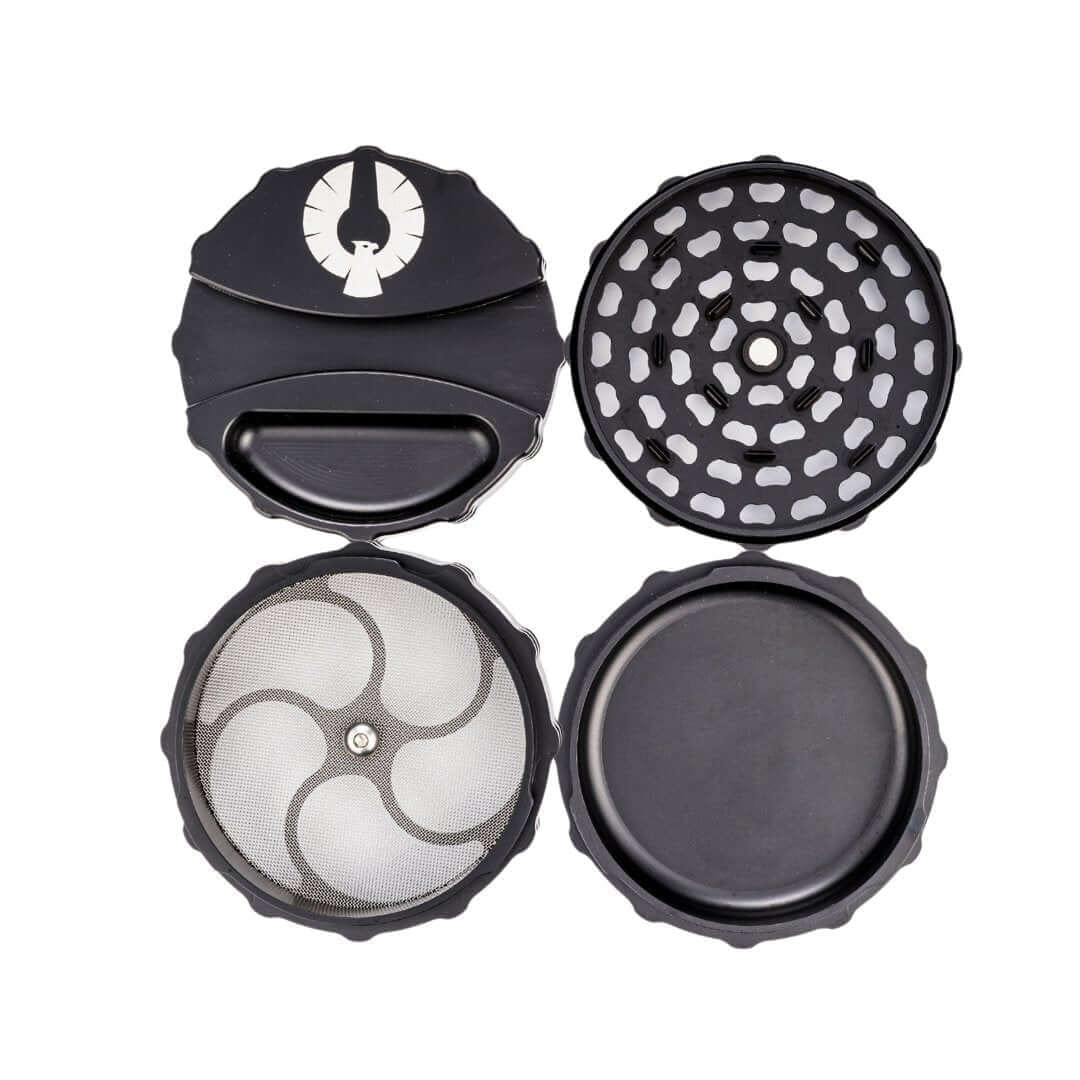
Most cheap grinders use rows of blunt pyramid pegs. They don't really cut. They grab, tear and crush, which bruises the flower, knocks trichomes loose in a sticky smear, and turns some of it to dust while leaving chunks elsewhere. Our teeth are diametrically cut and razor-sharp, closer to scissors, with fewer teeth than a typical grinder. They slice flower into even pieces with less mashing, so more resin stays on the flower or falls into your kief chamber instead of gumming up the teeth. Want the deep dive? Read the science behind cutting vs crushing.
The single easiest terpene upgrade costs nothing: don't pre-grind a week's worth. Ground flower has way more surface area, so it loses aroma faster than whole buds. Grind what you'll use for this session, maybe the next one, and leave the rest whole in the jar.
Powder looks efficient. It isn't. It burns hot and harsh, which cooks off the delicate flavors before you taste them. For joints, stop at fluffy. For bowls, a bit coarser. For vapes, medium-fine and even. Our grind guide covers each one.
Kief is mostly loose trichome heads, and trichomes are where terpenes live. A 4 piece grinder's screen sifts it into the bottom chamber. Sprinkle a pinch on a bowl or down a joint and you'll notice the extra flavor. Phoenician screens are removable, so you can swap screen sizes with the Upgrade Kit to collect more or less depending on your flower. Here's how the screen system works.
Old resin on the teeth smells stale and transfers onto fresh flower. A dull, gunked-up grinder also tears more than it cuts. Here's how to clean your grinder like a pro.

Aromatic compounds produced in the plant's trichomes that create each strain's smell and flavor, such as myrcene, limonene, caryophyllene and pinene.
Yes. Grinding opens the bud and releases aroma, which is why you smell it right away. It also means ground flower loses terpenes faster, so grind right before you use it.
There's no single number. Different terpenes evaporate at different temperatures, and losses climb as heat rises. For storage, cool and dark is the rule. For flavor, lower vape settings and a slower burn help.
Limonene is the main citrus terpene. Terpinolene can add a lighter citrus and floral note too.
No. THC is a cannabinoid. Terpenes are aroma compounds that come from the same trichomes but are a different class of molecule.
The flavor is already in the flower. Your job is to not lose it on the way to the bowl.

What you actually get at each weed grinder price tier, from budget plastic and zinc to premium machined aluminum, and where Phoenician's $39.99 to $99.99 lineup fits.

A 2 piece weed grinder is a lid and a bowl, nothing else. No screen to clog, no chamber to empty, and a fluffier grind because the flower stays in the teeth instead of dropping through holes. Phoenician 2 piece grinders use the same arced cutter blades, threadless quick lock and aerospace-grade 6061-T6 aluminum as the PRO 4 piece, with a notched grip groove around the body, and they carry the same limited lifetime warranty.
People who roll or pack right away and do not want to collect kief, people who want the fastest clean possible, and anyone who prefers a lighter grinder. If you want to save trichomes, choose a 4 piece grinder with a kief catcher instead.
Medium: 2.47 inch diameter, 1.14 inch tall, 5 oz. The everyday size. $39.99.
Large: 3.225 inch diameter, 1.14 inch tall, 9 oz. For bigger batches and shared sessions. $49.99. See all large weed grinders.
See all weed grinders or read our best weed grinder buyer's guide to compare 2 piece and 4 piece designs side by side.