Your Cart is Empty

Updated October 2026
Short answer: "Thai stick" started as a preparation, not a strain: high-quality Thai landrace buds tied around a bamboo or hemp stalk, then cured. It reached the US during the Vietnam War era and became a 1970s legend. Today the name covers Thai landrace sativa and Thai-style cannagars. Thai flower is long and airy, so grind it gently with a few short turns.
Ask anyone who was around in the '70s about Thai stick and watch their eyes go misty. It was the luxury import of its day, a tied bundle of cured bud that looked nothing like the brick weed everyone else was smoking. Fifty years of retelling have also turned it into a tall tale, so this guide sticks to what can actually be sourced. Then, because we make grinders, we'll tell you how to handle the flower.
Per Wikipedia's Thai stick entry, the original was high-quality bud from northeast Thailand, where hill tribes had grown cannabis for a very long time. The traditional method went like this:
The result was a dense, cigar-like bundle that traveled well and burned slow. Over time the name "Thai stick" drifted from the bundle to the Thai sativa inside it, which is why you'll see it listed as a strain today.
Thai stick's US fame took off in the Vietnam War era, when American soldiers in Southeast Asia encountered it. Leafly's Thai strain page says Thai landrace genetics were brought to the US in the '70s and '80s. Then the supply dried up. According to Wikipedia, most of the original crop was destroyed in the 1970s when the Thai government launched its own war on drugs. Making Thai-style sticks from other strains carried on around the world.
Our old version of this post said breeder Ken Estes was the man who brought Thai stick to America. We couldn't find any source for that, so it's out. (Estes is known for Granddaddy Purple, which is plenty.) We also cut the surfboard-smuggling romance. Fun story, zero sources.
One modern footnote: Thailand legalized medical cannabis again in 2018, and its rules have shifted more than once since. Laws change fast, there and here, so check current rules before assuming anything.
Thai landrace flower doesn't taste like modern dessert strains. Think earthy, tea-like and a little tobacco, with sweet, tropical and citrus notes on top. Leafly lists the dominant terpenes as:
| Terpene | Smells like | What it does for Thai |
|---|---|---|
| Caryophyllene | Pepper, spice | The spicy, tobacco-ish backbone |
| Myrcene | Herbal, earthy | Earthy, tea-like depth |
| Limonene | Citrus | The bright tropical-citrus lift |
Thai is a classic energetic sativa in most people's experience. Leafly reviewers most often describe it as focused, energetic and creative, a daytime strain rather than a couch strain. Some people find old-school sativas racy, so go slow. Adults 21+ only, and follow your local laws.
Leafly describes Thai buds as long, dark nugs with orange hairs. Like most equatorial sativas, the flower is usually lighter and airier than an indica, with more space between the calyxes. It breaks apart easily in your fingers. An actual tied stick is the opposite: cured tight, compressed, and firm.

There are two situations here, and they need different handling.
A traditional Thai stick is made to be smoked as-is, so there's nothing to grind. If you're breaking one down to roll or pack, remove the string and the stick, then gently break the compressed bud apart by hand before it goes in the grinder. Pressed flower is denser than it looks, so load loosely and use short back-and-forth turns.
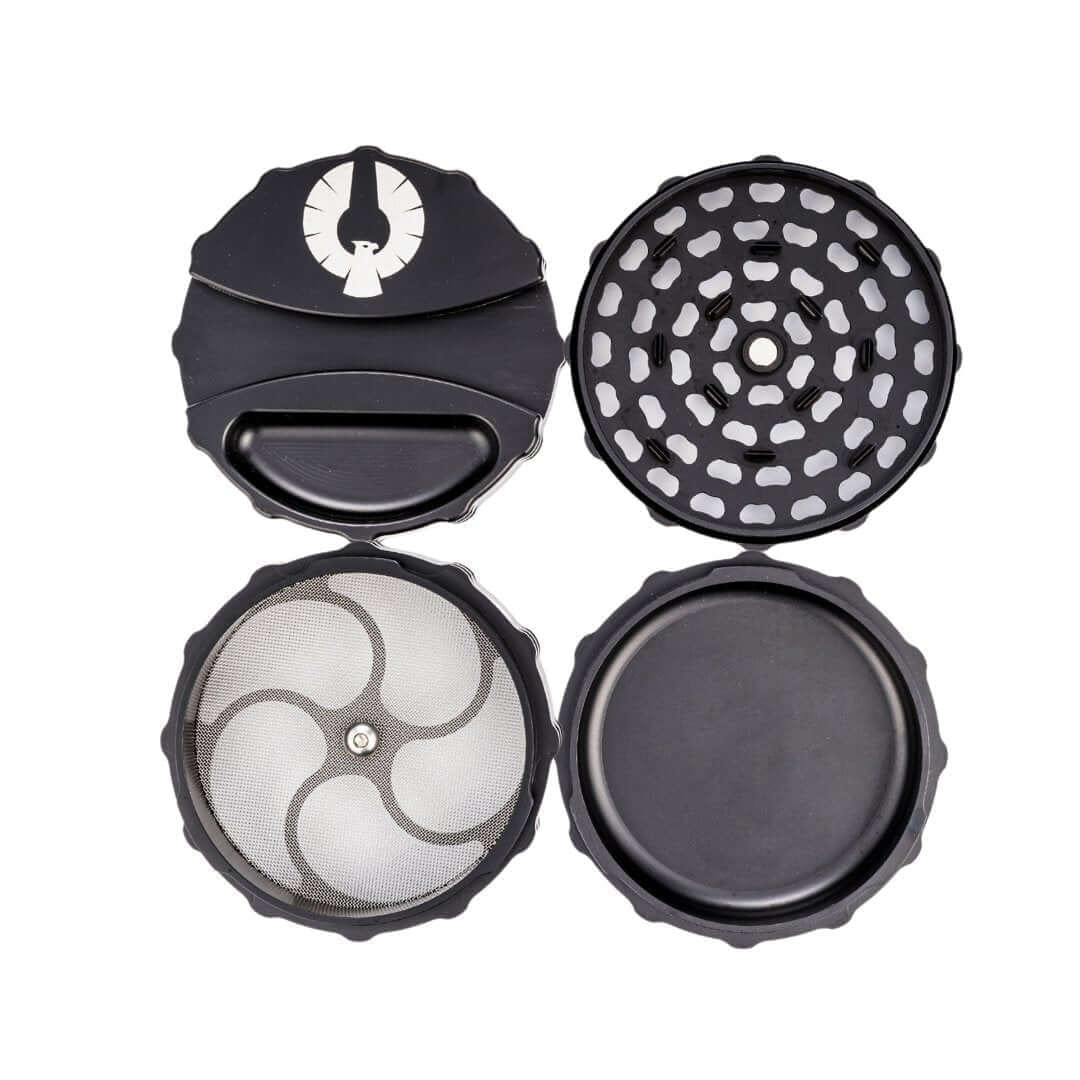
Which screen? Thai flower tends to run dry and fluffy, so the 180 micron fine screen from the Upgrade Kit keeps plant bits out of your kief. Standard 300 micron works for most people. Save the 400 micron coarse screen for humid weather or sticky flower. Our grind science guide explains why cutting beats crushing.

Thai genetics are baked into a lot of classics. Leafly credits Thai as an ancestor of Haze, Voodoo and Juicy Fruit. Through Haze, Thai blood runs into strains like Purple Haze, which is usually traced to Purple Thai x Haze, and the Super Silver Haze family.
Check your state and local home-grow rules first, since they vary a lot. For legal growers, Leafly notes Thai is a challenge outside tropical climates because of its long growth cycle and slow flowering, and it's generally considered a project for experienced, patient growers. Expect tall, stretchy plants. Our home grow guide covers the basics through drying and curing.
Both, kind of. It started as a preparation (bud tied around a stick and cured) and the name later stuck to the Thai landrace sativa used to make it.
They were higher quality than most cannabis available in the US in the '60s and '70s, they looked exotic, and they were scarce, especially after Thailand's 1970s crackdown.
The original 1970s supply is basically gone. Where cannabis is legal, you may find Thai-style cannagars, which are a modern take on the format.
A sharp grinder and a light touch. Thai is airy, so a few short turns is usually enough. A 4 piece with a fine screen saves kief without catching plant dust.
The sticks are mostly history. A good grind never goes out of style.

A fact-checked timeline of cannabis history, from ancient hemp and the first evidence of smoking to Reefer Madness, Schedule I, Prop 215 and 2026 rescheduling.

How to read a cannabis COA in two minutes: verify the lab, calculate total THC from THCA, read terpenes and safety panels, and spot inflated results.

All 50 states plus DC in one table: adult-use, medical and home grow status, plus federal Schedule III, the November 2026 ballot and what to watch in 2027.
A 2 piece weed grinder is a lid and a bowl, nothing else. No screen to clog, no chamber to empty, and a fluffier grind because the flower stays in the teeth instead of dropping through holes. Phoenician 2 piece grinders use the same arced cutter blades, threadless quick lock and aircraft grade aluminum as the PRO 4 piece, with a notched grip groove around the body, and they carry the same limited lifetime warranty.
People who roll or pack right away and do not want to collect kief, people who want the fastest clean possible, and anyone who prefers a lighter grinder. If you want to save trichomes, choose a 4 piece grinder with a kief catcher instead.
Medium: 2.47 inch diameter, 1.14 inch tall, 5 oz. The everyday size. $39.99.
Large: 3.225 inch diameter, 1.14 inch tall, 9 oz. For bigger batches and shared sessions. $49.99.
See all weed grinders or read the buyer's guide to compare 2 piece and 4 piece designs side by side.