Your Cart is Empty

Updated October 2026
Short answer: to grow weed at home, first confirm your state allows it. Twenty-four states plus DC have legalized adult use, but four of them (Delaware, Illinois, New Jersey and Washington) don't let adults home-grow. Then start small: a couple of autoflower or feminized seeds (or clones), a tent with an LED light, good soil, and patience. Plan on three to five months from seed to a cured jar.
Growing your own is the most satisfying way to stock your stash. It's also the most humbling. You will overwater. You will stare at a leaf for twenty minutes wondering if it looks "sad." Totally normal.
We're a grinder company, so yes, this guide ends with how to grind your harvest. But the first 90% is the grow itself: what's legal, what to buy, what the timeline really looks like, and how to dry and cure so all that work actually smokes well.
Cannabis is still illegal under federal law, so home growing is purely a state (and sometimes city) question. According to the Marijuana Policy Project, 24 states have legalized cannabis for adults 21 and over, and their home cultivation map notes that only four of those states don't allow adults to grow for personal use: Delaware, Illinois, New Jersey and Washington.
Even where it's legal, the details vary a lot:
Check your state cannabis agency's website for current numbers before you spend a dollar. And keep everything you grow in your state. Plants, clones and flower don't cross state lines, period.
This is the first real decision, and it shapes your whole grow.
| Option | The upside | The catch | Best for |
|---|---|---|---|
| Feminized seeds (photoperiod) | Bred to produce female, bud-making plants. You control when they flower, so you can grow them bigger. | You manage the light schedule, and they take longer. | Growers who want control and bigger yields |
| Autoflower seeds | Flower on their own based on age, not light. Usually smaller and faster. | Less time to recover from mistakes, smaller plants. | First-timers, small tents, balconies |
| Clones | A cutting from a known female plant. Skip germination, know exactly what you're getting. | Can bring pests or mildew home with them. Inspect hard. | People who want a specific strain fast |
Where your state allows it, buy seeds or clones from a licensed dispensary or a reputable source so you know what you're getting. For your first run, pick something with a reputation for being forgiving. Old-school classics like Northern Lights and White Widow are popular beginner picks because they're compact and sturdy. Browse more ideas in our best weed strains guide.
Indoor gives you control: light, temperature, humidity, privacy and a harvest any time of year. It costs more up front and adds to your power bill.
Outdoor is cheap and the sun is free. You get one harvest a year (plant in spring, harvest roughly late September to early November in much of the US), and you deal with weather, bugs, deer, and nosy neighbors. A deer eating your plant the week before harvest is a rite of passage nobody wants.
If your state allows outdoor grows, check the rules on visibility and fencing first. For most first-timers, a small indoor tent is the easiest place to learn.
A quality full-spectrum LED is the standard now. It runs cooler and cheaper than old-school HID lamps. Photoperiod plants typically get about 18 hours of light a day while growing (vegetative stage), then 12 hours on and 12 hours of total darkness to trigger flowering. Autoflowers can stay on a long light schedule the whole time.
A 2x2 or 2x4 grow tent, an inline exhaust fan, a carbon filter and a small clip fan cover most of it. Airflow prevents mold, strengthens stems, and the carbon filter keeps your living room from smelling like a dispensary. Your neighbors will thank you.
Soil is the most forgiving medium for beginners. Look for a loose, well-draining mix with real organic matter (compost, worm castings, perlite). Healthy soil is a living ecosystem full of microbes, and compacted, worn-out soil starves roots of air and water. Fabric pots help roots breathe; 3 to 5 gallons works in most tents, bigger outdoors. Cannabis likes a slightly acidic root zone, roughly pH 6.0 to 7.0 in soil (5.5 to 6.5 if you go hydro).
Plants want more nitrogen while growing leaves and stems, then more phosphorus and potassium once they're flowering. Use a nutrient line made for cannabis or a balanced organic fertilizer, and start at half the label dose. Burnt leaf tips mean back off.
Overwatering kills more first grows than anything else. Water thoroughly, then wait until the top inch or so of soil is dry and the pot feels light. Droopy, heavy-pot plants are drowning, not thirsty.
Check leaves (tops and undersides) every few days. Common troublemakers: spider mites, fungus gnats, aphids, thrips, caterpillars outdoors, plus powdery mildew and bud rot. Prevention beats cure: clean tent, good airflow, don't crowd plants, and keep any sprays off flowering buds.
| Stage | Typical length | What's happening |
|---|---|---|
| Germination | A few days to about a week | Seed cracks, taproot appears |
| Seedling | About 2 to 3 weeks | First true leaves, delicate stage |
| Vegetative | 3 to 8+ weeks (indoors, you decide) | Leaves, branches, size |
| Flowering | About 7 to 10 weeks, strain-dependent | Buds form and ripen |
| Drying | About 7 to 14 days | Moisture leaves slowly |
| Curing | 2 weeks minimum, 4 to 8 is better | Flavor and smoothness improve |
Autoflowers often finish faster from seed to harvest. Either way, the calendar doesn't end at the chop. Drying and curing are part of the grow.
Ignore the calendar and look at the trichomes, the tiny resin glands covering your buds. Grab a jeweler's loupe or a cheap clip-on phone macro lens:
Want to know what you're looking at? Our guide to trichomes and kief breaks it down.
This is where your harvest meets your grinder, and it matters more than people think:
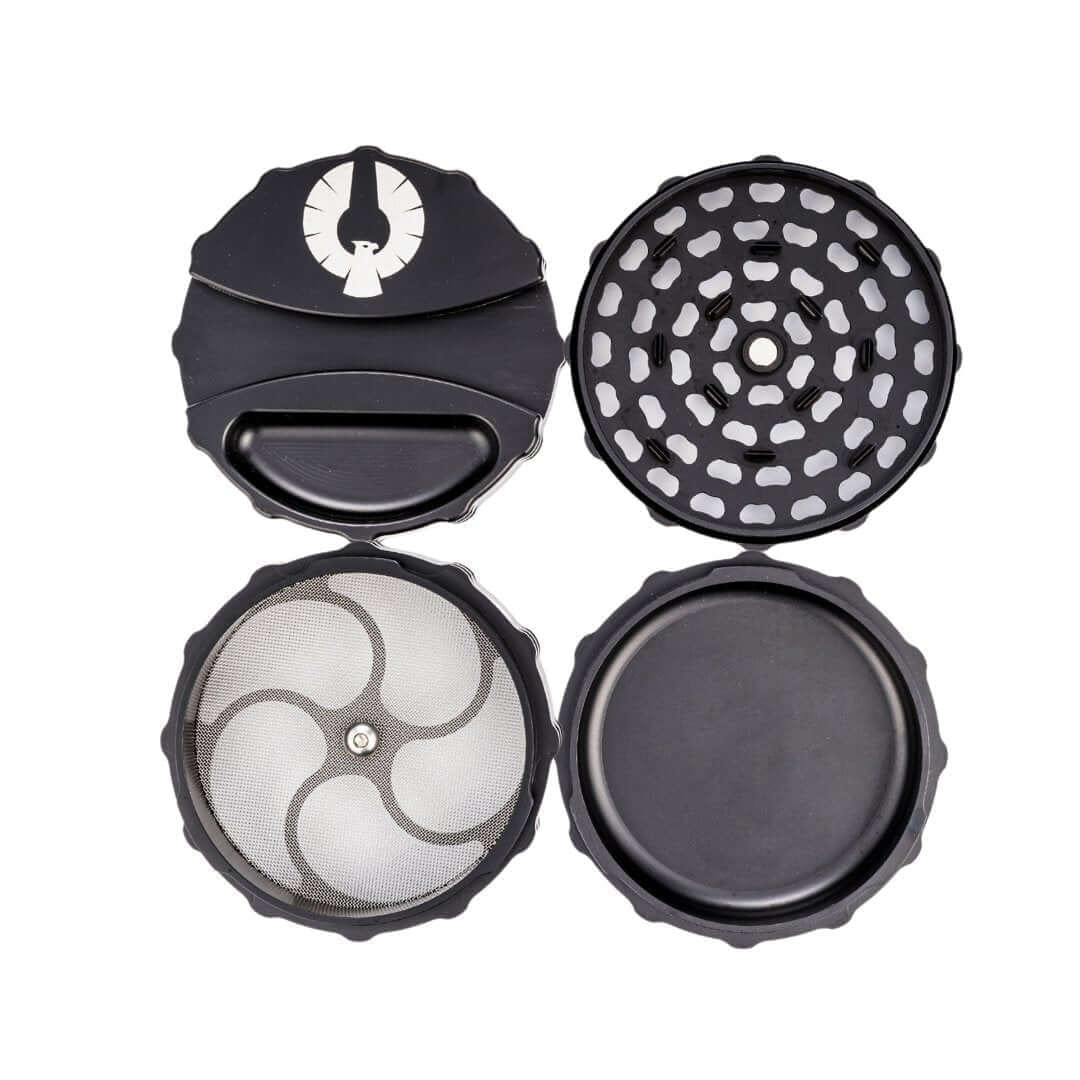
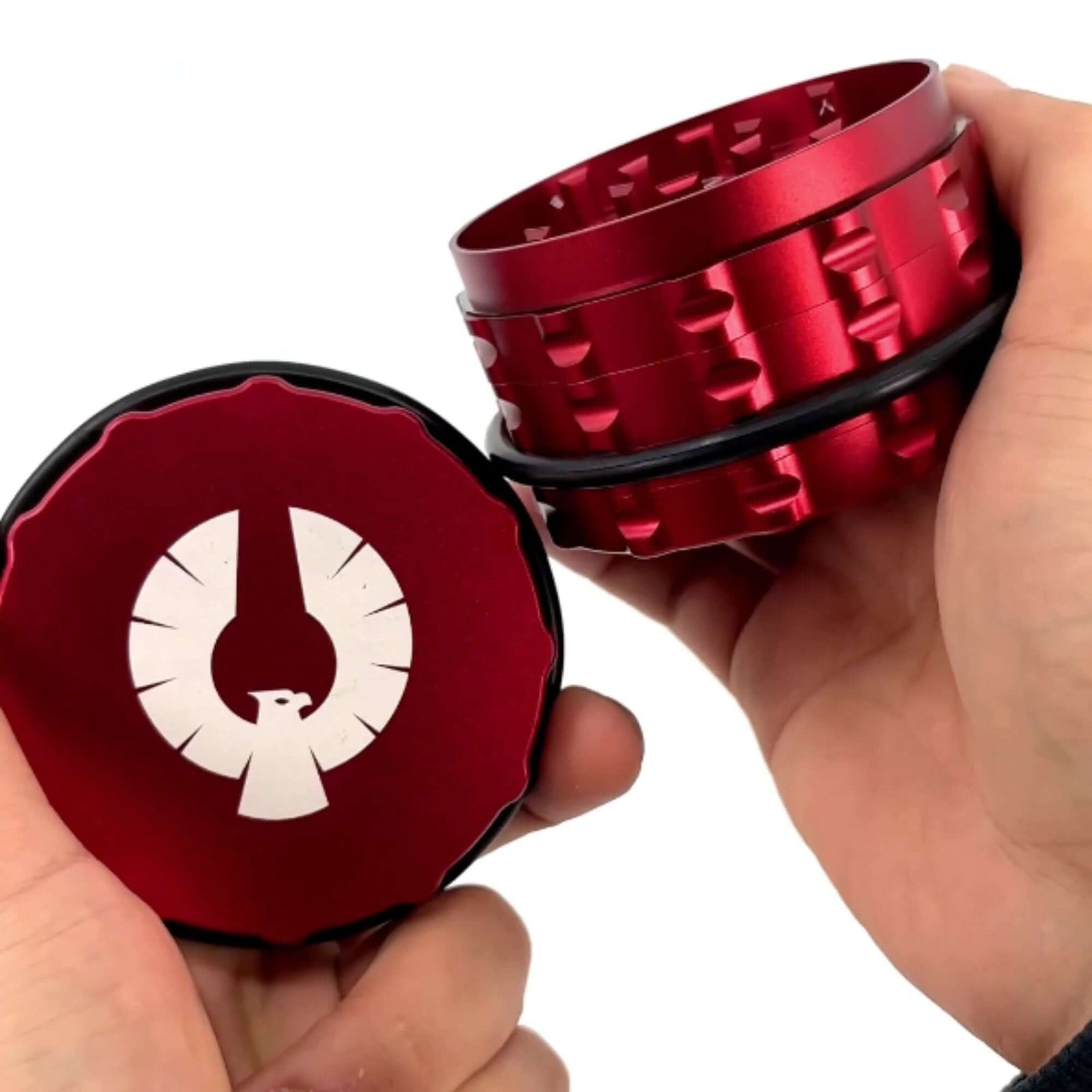
You spent months on this flower. Don't mash it with a dull, threaded grinder that crushes buds and leaves metal-on-metal grit. Here's how we'd do it:

Phoenician teeth are diametrically cut and razor sharp, so they slice like scissors instead of crushing, which keeps more trichomes on the plant material and in your kief chamber. The science behind that is in why cutting beats crushing, and the full technique lives in our Grind Guide.

It depends on your state and sometimes your city. California allows 6 per residence for adults 21+, and four adult-use states don't allow home growing at all. Check your state cannabis agency for current limits.
Usually three to five months from seed to a cured jar. Autoflowers can be quicker. Drying and curing add two to ten weeks after harvest.
Only if your state allows home growing and your lease does too. A small tent with a carbon filter keeps it discreet, but landlords can still prohibit it.
At least two weeks. Four to eight weeks usually gives smoother smoke, better flavor and a cleaner grind.
It's usually not dry enough. Give it more cure time, and if it's still sticky, switch to a coarser screen.
Grow it right, dry it slow, cure it patiently, and grind it with something that deserves it. Happy growing.

A fact-checked timeline of cannabis history, from ancient hemp and the first evidence of smoking to Reefer Madness, Schedule I, Prop 215 and 2026 rescheduling.

How to read a cannabis COA in two minutes: verify the lab, calculate total THC from THCA, read terpenes and safety panels, and spot inflated results.

All 50 states plus DC in one table: adult-use, medical and home grow status, plus federal Schedule III, the November 2026 ballot and what to watch in 2027.
A 2 piece weed grinder is a lid and a bowl, nothing else. No screen to clog, no chamber to empty, and a fluffier grind because the flower stays in the teeth instead of dropping through holes. Phoenician 2 piece grinders use the same arced cutter blades, threadless quick lock and aircraft grade aluminum as the PRO 4 piece, with a notched grip groove around the body, and they carry the same limited lifetime warranty.
People who roll or pack right away and do not want to collect kief, people who want the fastest clean possible, and anyone who prefers a lighter grinder. If you want to save trichomes, choose a 4 piece grinder with a kief catcher instead.
Medium: 2.47 inch diameter, 1.14 inch tall, 5 oz. The everyday size. $39.99.
Large: 3.225 inch diameter, 1.14 inch tall, 9 oz. For bigger batches and shared sessions. $49.99.
See all weed grinders or read the buyer's guide to compare 2 piece and 4 piece designs side by side.