Your Cart is Empty

Updated October 2026
Short answer: THC is the cannabinoid that gets you high. CBD is its non-intoxicating cousin, with the exact same atoms arranged differently. Federally, hemp-derived CBD is legal under hemp rules that tighten on November 12 and December 11, 2026, while most THC is still controlled. Drug tests look for a THC metabolite, not CBD, and CBD products can contain THC.
Few cannabis questions get answered worse online than this one. Half the internet treats CBD like a miracle in a dropper bottle. The other half acts like it's weed in a trench coat. Neither is right, and neither helps you figure out what's in the jar you're holding.
So here's the plain version: what each compound is, how they actually differ, where the law stands heading into 2027, what shows up on a drug test, and how to read a label without getting played. We're a grinder company, so yes, there's a section on grinding both. We kept it short. Mostly.
| THC (delta-9 THC) | CBD (cannabidiol) | |
|---|---|---|
| Gets you high? | Yes. It's the main intoxicating compound in cannabis. | No. The CDC describes it as not impairing. |
| Chemical formula | C21H30O2 | C21H30O2 (same atoms, different shape) |
| Raw-plant form | THCA, which turns into THC with heat | CBDA, which turns into CBD with heat |
| Usually found in | Marijuana (high-THC cannabis) | Hemp and CBD-dominant strains |
| Federal status | Schedule I, except state-licensed medical and FDA-approved products (Schedule III since April 2026) | Legal from hemp, within hemp rules that tighten in late 2026 |
| Shows up on a drug test? | Yes. Tests look for a THC metabolite. | Tests don't look for CBD, but many CBD products contain some THC. |
THC and CBD are both cannabinoids, the compounds cannabis makes in the resin glands (trichomes) on its flowers. Here's the weird part: they have the same molecular formula, C21H30O2. Same 21 carbons, 30 hydrogens, 2 oxygens. In THC one of the rings is closed. In CBD that ring is open. That one structural difference is the reason one gets you high and the other doesn't.
The living plant barely makes either one. It makes their acid forms, THCA and CBDA, which both start out as a precursor called CBGA. A 2024 study in the Journal of Cannabis Research sums it up: cannabinoids in the plant "primarily exist as their carboxylic acids," and heat turns them into the neutral forms. That process is called decarboxylation, and it's why raw flower isn't intoxicating but lit flower is. A lighter, a vape coil or an oven does the converting.
Keep THCA in mind. It's the loophole that built a whole industry, and it's about to close. If you want the deeper science of what lives on a bud, our guide to trichomes and kief goes there.
THC is what the FDA calls the psychoactive component of cannabis. It's the "high." People commonly describe changes in mood and perception, a relaxed or giggly headspace, a different sense of time, and the munchies. Too much can also feel unpleasant: racing thoughts, a dry mouth, a strong urge to sit on the floor. How it lands depends on dose, the person, the setting and the method.
CBD doesn't do that. The CDC puts it plainly: CBD "is not impairing, meaning it does not cause a 'high.'" Some people describe CBD flower or products as mellow. Plenty of people say they don't feel much at all.
What we won't do is tell you CBD fixes anything. Online claims run way ahead of what's been approved. The regulatory fact is narrower: the FDA has approved exactly one prescription drug made with purified CBD, Epidiolex, and says CBD can't legally be added to food or sold as a dietary supplement (FDA). Health questions go to your doctor, not to a grinder company's blog.
The 2018 Farm Bill defined hemp as cannabis with no more than 0.3% delta-9 THC by dry weight. The market read that as a challenge.
Congress closed the gap in November 2025. The funding law H.R. 5371 rewrote the federal definition of hemp to count total THC (THCA included) and to cap finished hemp products at 0.4 milligrams of total THC per container. Here's the current calendar:
That cap also catches a lot of full-spectrum CBD products, which carry small amounts of THC. Expect reformulated labels, empty shelves and some last-minute drama in Congress. Our rescheduling and hemp update tracks it.
Here's where we get to have opinions. CBD flower and THC flower are the same plant species, often grown the same way, and they look nearly identical. Sticky, dense, frosty. The difference is in the lab report, not the bag.
That means grinding works the same for both:
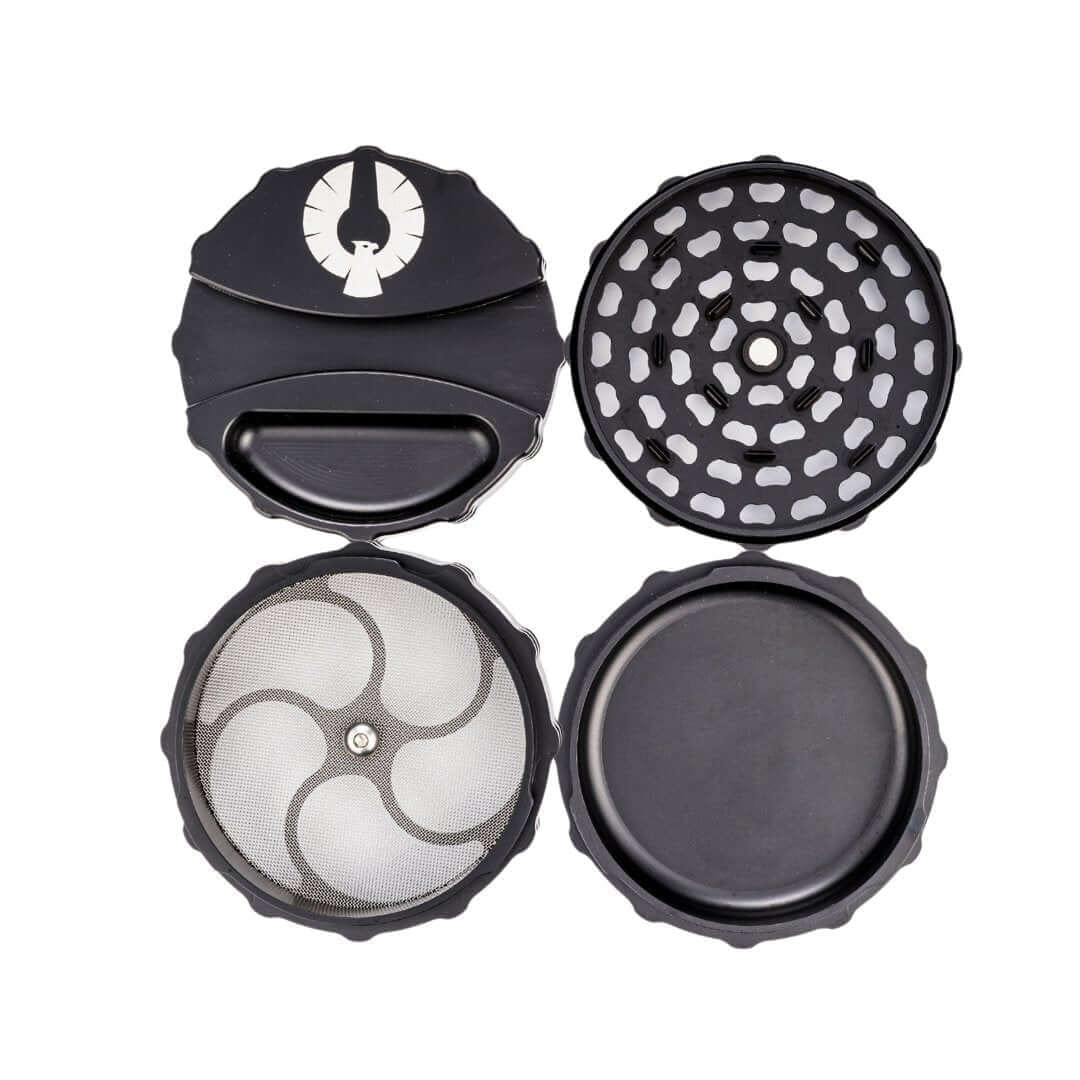
Two things are worth knowing. Hemp flower is often drier and leafier, and a dull grinder turns dry bud into dust. Sharp teeth that cut instead of crush keep it fluffy. And both types carry those resin-rich trichomes, so a screen and kief chamber catch the good stuff instead of leaving it on your fingers.


Federally, it splits three ways as of October 2026:
At the state level, 24 states plus DC allow adult-use cannabis and many more have medical programs. Some states also restrict hemp products on their own. Our state-by-state legal weed guide has the full 50-state table. Short version: check your state and city before you buy, and never carry either across state lines.
This one costs people jobs, so let's be precise.
Standard workplace drug tests don't look for CBD. They look for THC's metabolite. Under the federal DOT testing rules (49 CFR 40.85), the urine screen flags marijuana metabolites at 50 ng/mL and the confirmation test at 15 ng/mL. Confusingly, the regs abbreviate that metabolite (THC-COOH) as "THCA," which is not the same thing as the THCA in raw flower.
The problem is what's actually in the bottle. The Department of Transportation's CBD notice warns that "the labeling of many CBD products may be misleading because the products could contain higher levels of THC than what the product label states," and that "CBD use is not a legitimate medical explanation for a laboratory-confirmed marijuana positive result."
Translation:
The label is marketing. The certificate of analysis (COA) is the receipt. Before you buy anything, CBD or THC, find the COA (usually a QR code) and check:
We walk through a real lab report line by line in how to read a cannabis lab test. If you care about flavor too, the terpene section of a COA is worth a look. Here's what terpenes are and how grinding affects them.
No. The CDC describes CBD as not impairing. But CBD products can contain THC, especially full-spectrum ones, and THCA "hemp" flower converts to THC when heated, so read the COA.
Tests look for a THC metabolite, not CBD. But many CBD products contain some THC, and federal transportation rules say CBD use isn't an accepted explanation for a positive marijuana test.
Hemp-derived CBD is legal federally within hemp rules, but states can restrict it, and the federal definition tightens on November 12 and December 11, 2026. Check your state's current rules.
Under the new federal hemp definition, hemp is measured by total THC including THCA, so high-THCA flower falls outside hemp once the change takes effect on December 11, 2026. State rules vary too.
Yes. Same plant, same structure. Hemp is often drier, so sharp cutting teeth and a light hand keep it from turning to dust.
CBD or THC, the bud still has to get from nug to bowl. Make it a clean cut.

A fact-checked timeline of cannabis history, from ancient hemp and the first evidence of smoking to Reefer Madness, Schedule I, Prop 215 and 2026 rescheduling.

How to read a cannabis COA in two minutes: verify the lab, calculate total THC from THCA, read terpenes and safety panels, and spot inflated results.

All 50 states plus DC in one table: adult-use, medical and home grow status, plus federal Schedule III, the November 2026 ballot and what to watch in 2027.
A 2 piece weed grinder is a lid and a bowl, nothing else. No screen to clog, no chamber to empty, and a fluffier grind because the flower stays in the teeth instead of dropping through holes. Phoenician 2 piece grinders use the same arced cutter blades, threadless quick lock and aircraft grade aluminum as the PRO 4 piece, with a notched grip groove around the body, and they carry the same limited lifetime warranty.
People who roll or pack right away and do not want to collect kief, people who want the fastest clean possible, and anyone who prefers a lighter grinder. If you want to save trichomes, choose a 4 piece grinder with a kief catcher instead.
Medium: 2.47 inch diameter, 1.14 inch tall, 5 oz. The everyday size. $39.99.
Large: 3.225 inch diameter, 1.14 inch tall, 9 oz. For bigger batches and shared sessions. $49.99.
See all weed grinders or read the buyer's guide to compare 2 piece and 4 piece designs side by side.